
Serving London, Ontario
and surrounding areas
Recent Installations



-
Drywall is the general name for gypsum wallboard, while Sheetrock® is a premium drywall brand made by USG. Like "Kleenex" or "Tylenol," Sheetrock® is often used generically, but not all drywall products are the same. Different brands offer varying levels of strength, moisture resistance, and performance.
-
Yes. Areas exposed to humidity should use moisture-resistant drywall, and shower or tub surrounds should use a proper tile backer system—not drywall. Choosing the right substrate helps prevent mold, swelling, and premature failure.
-
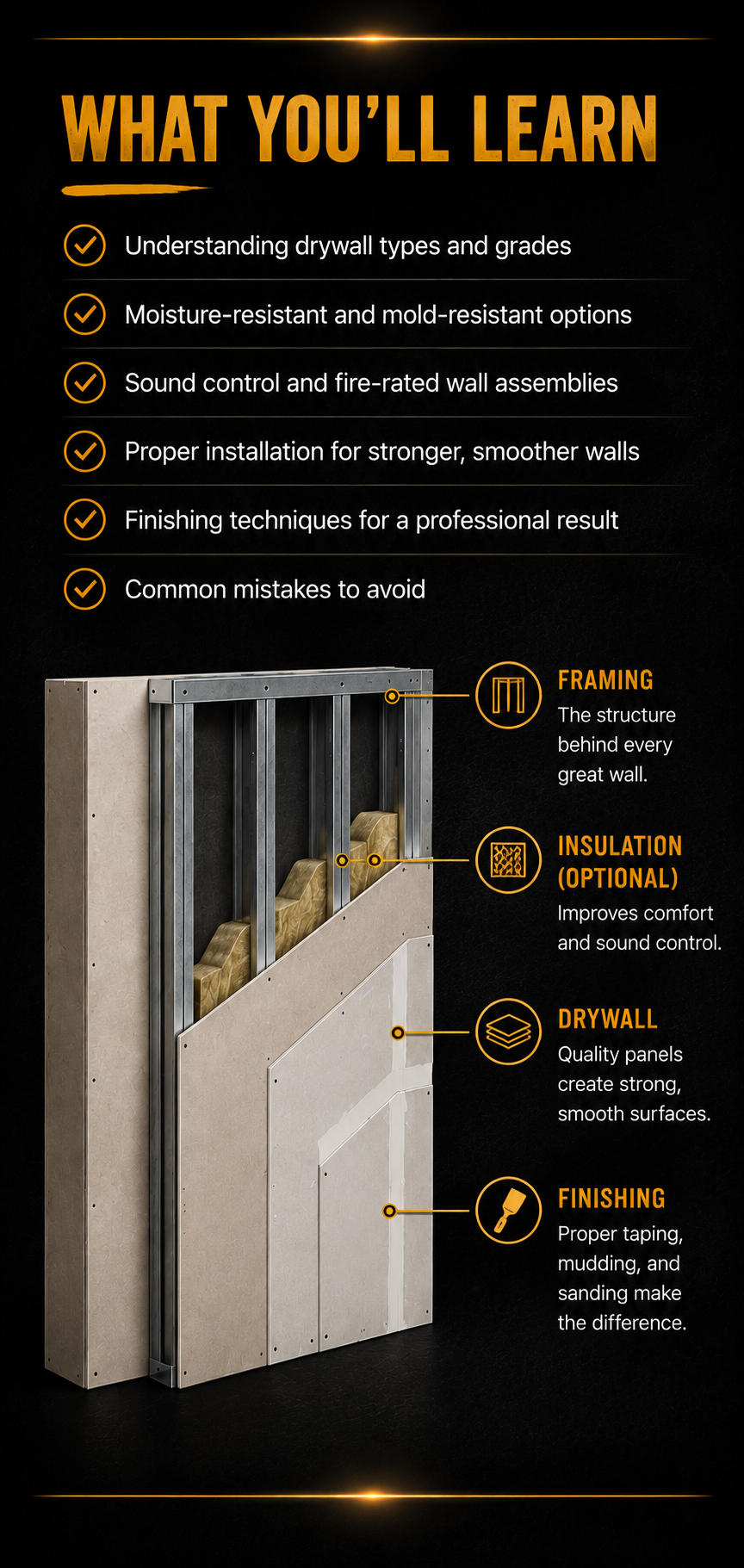
Soundproofing is about the entire wall assembly, not just the drywall. Options like sound-rated drywall, insulation, resilient channel, acoustic sealant, and proper air sealing all work together to reduce noise between rooms.
-
Generally, yes. 5/8-inch drywall is stiffer, more impact resistant, and often provides better sound control and fire resistance than standard 1/2-inch drywall. The right thickness depends on the application and building code requirements.
-
Cracks are usually caused by movement in the framing, seasonal expansion and contraction, poor fastening, or improper finishing. Correct installation techniques and proper structural support greatly reduce the likelihood of future cracking.
-
Not always. Minor moisture exposure may simply require drying and repair, but drywall that has become saturated, moldy, soft, or structurally weakened should usually be replaced to restore the integrity of the wall system.
-
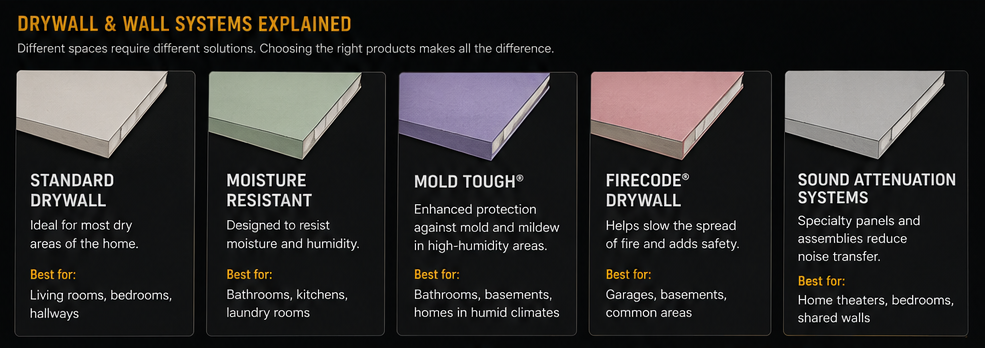
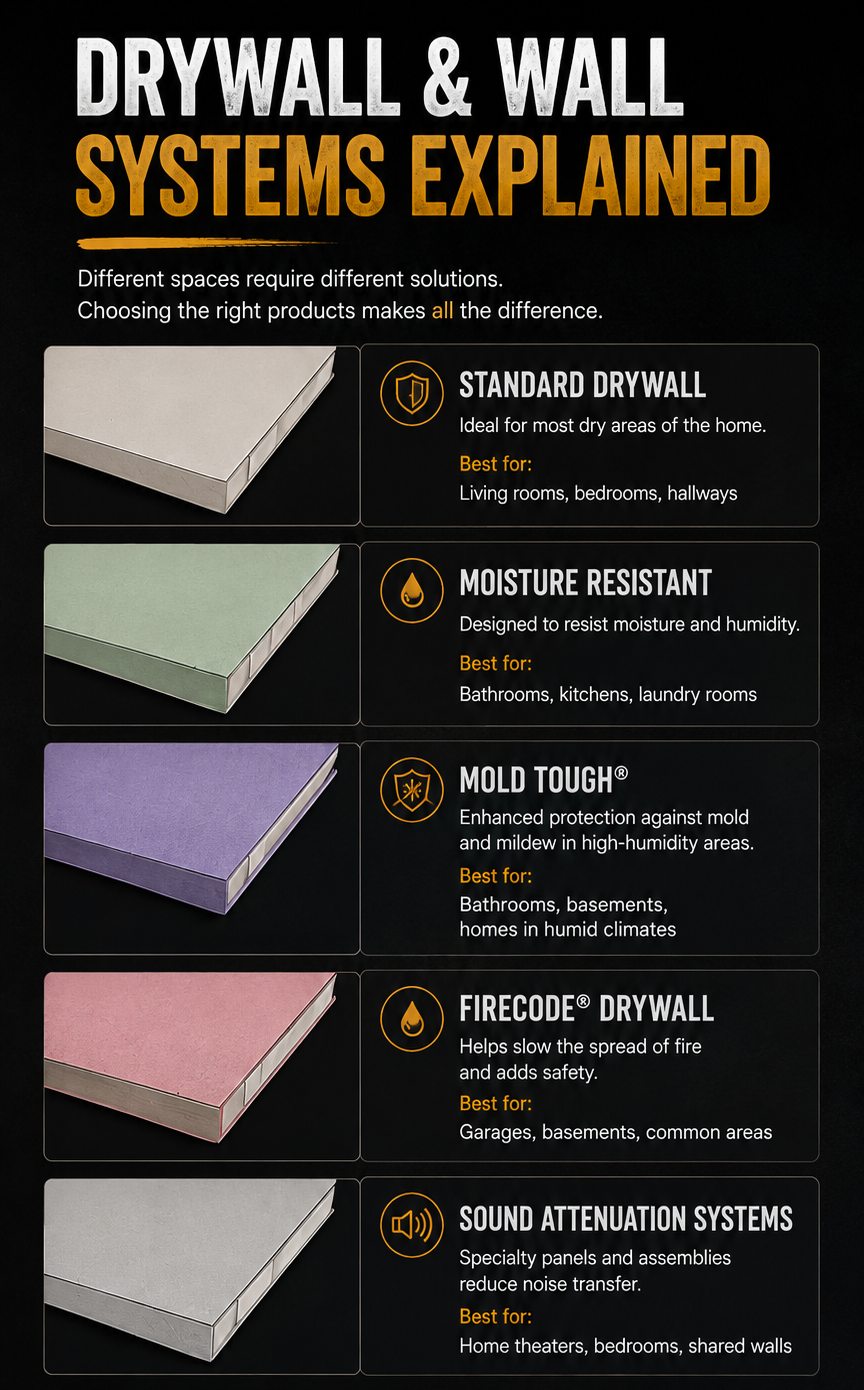
The colour identifies different product types. White or grey is standard drywall, green is moisture resistant, purple offers enhanced mold and moisture resistance, while pink or red products are often fire-rated. Always choose the board that's designed for the specific room.
-
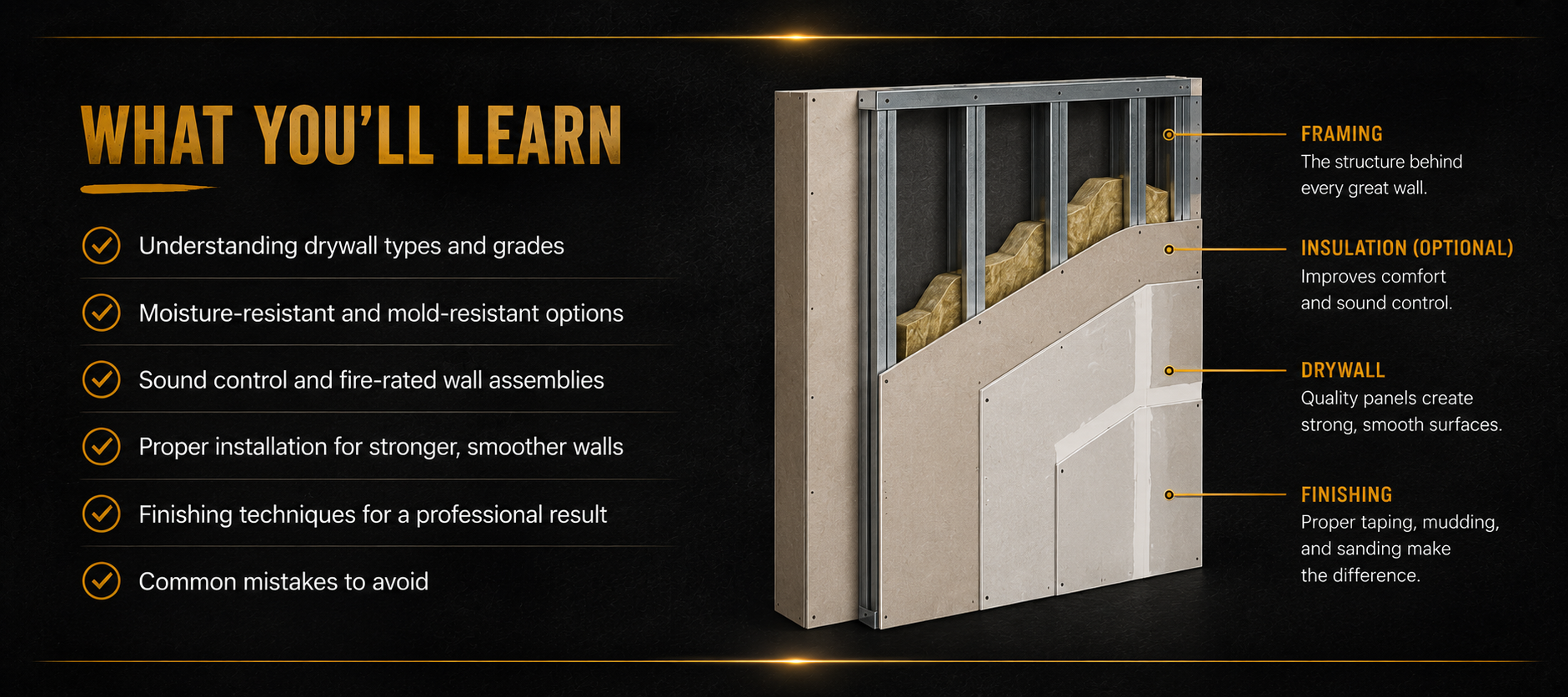
Quality drywall is only part of the equation. Proper framing, careful installation, taping, mudding, sanding, and priming all contribute to a smooth, durable finish. The best paint job starts with a well-built wall.