London, Ontario
Serving London, Ontario
and surrounding areas

-
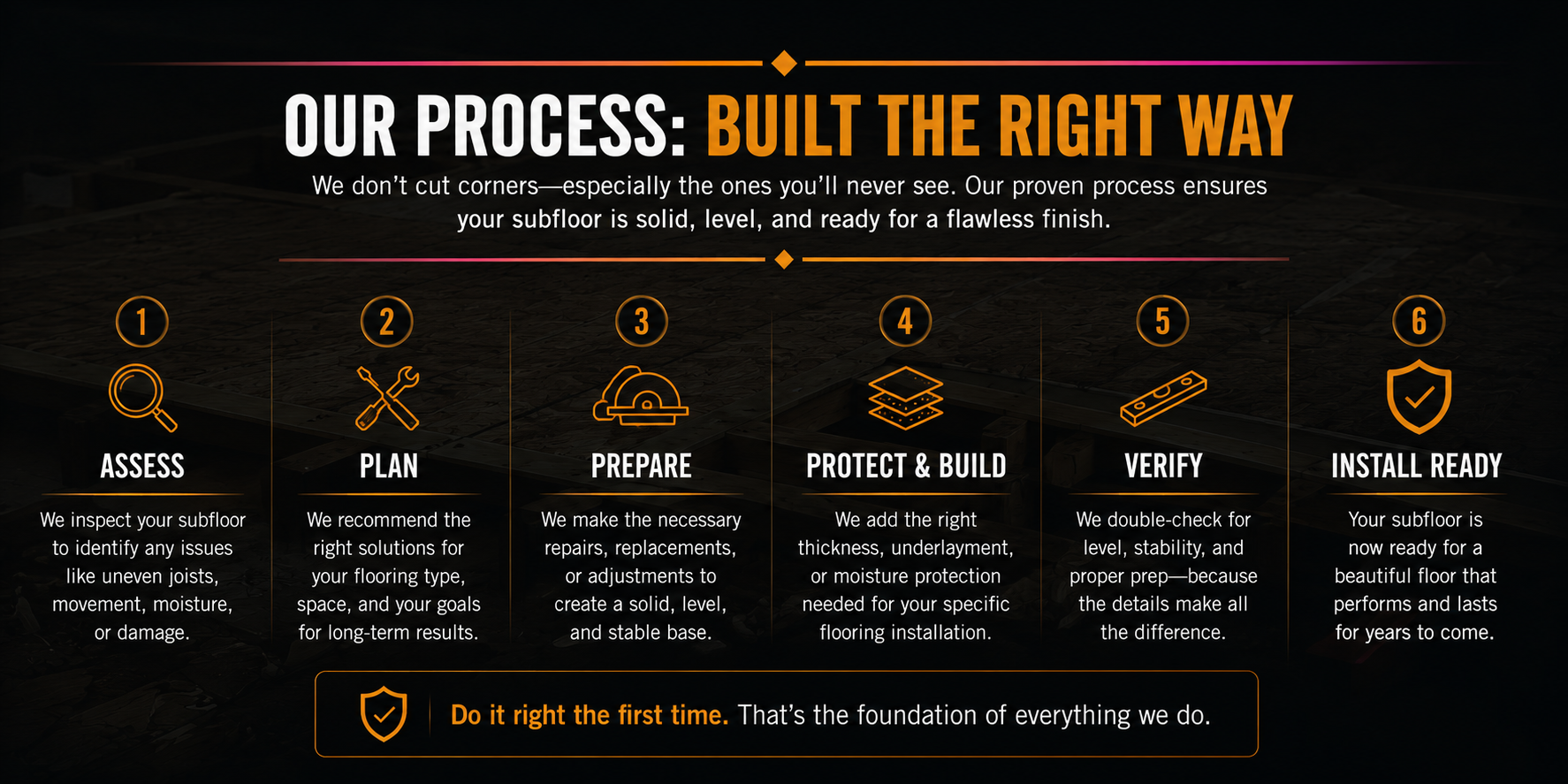
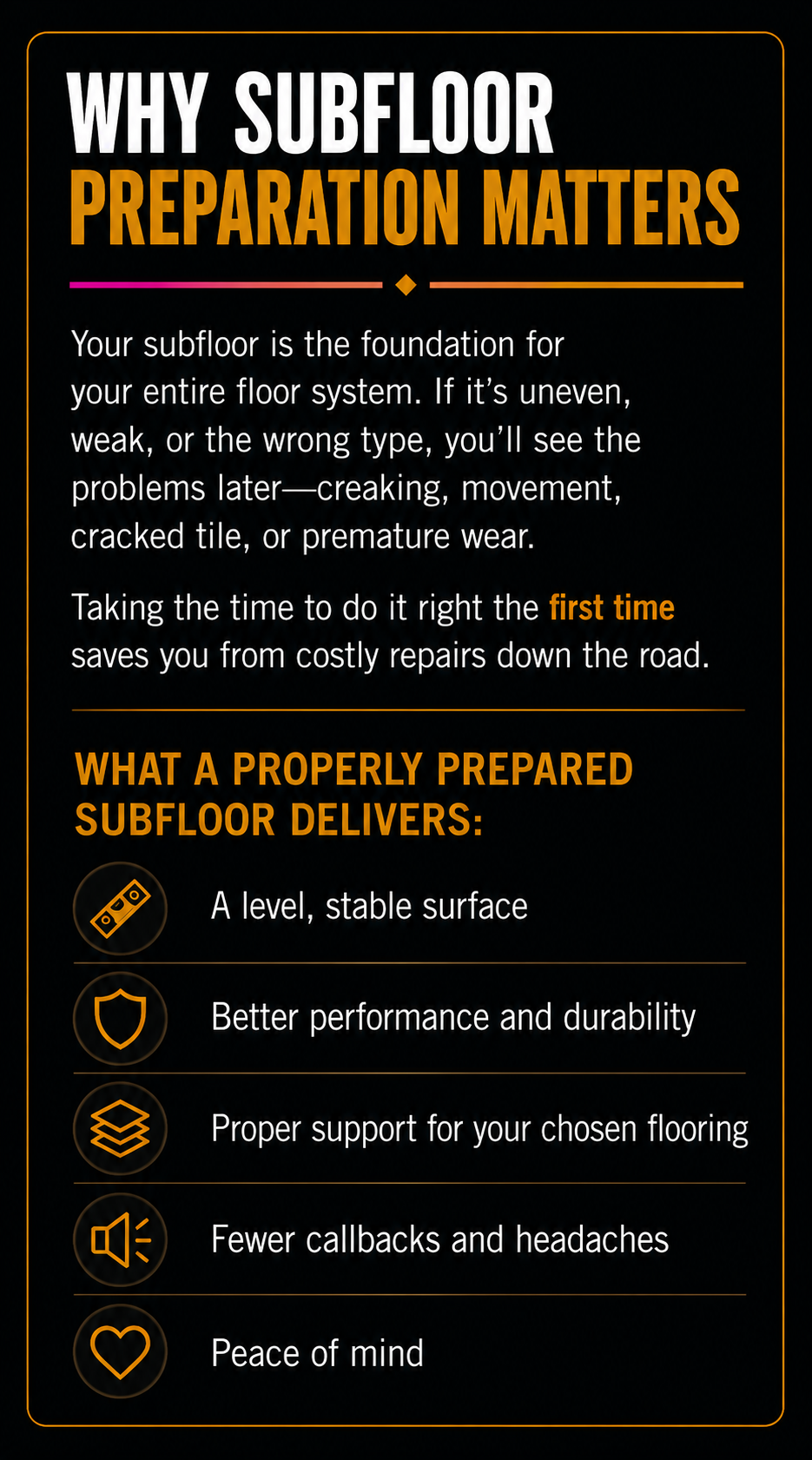
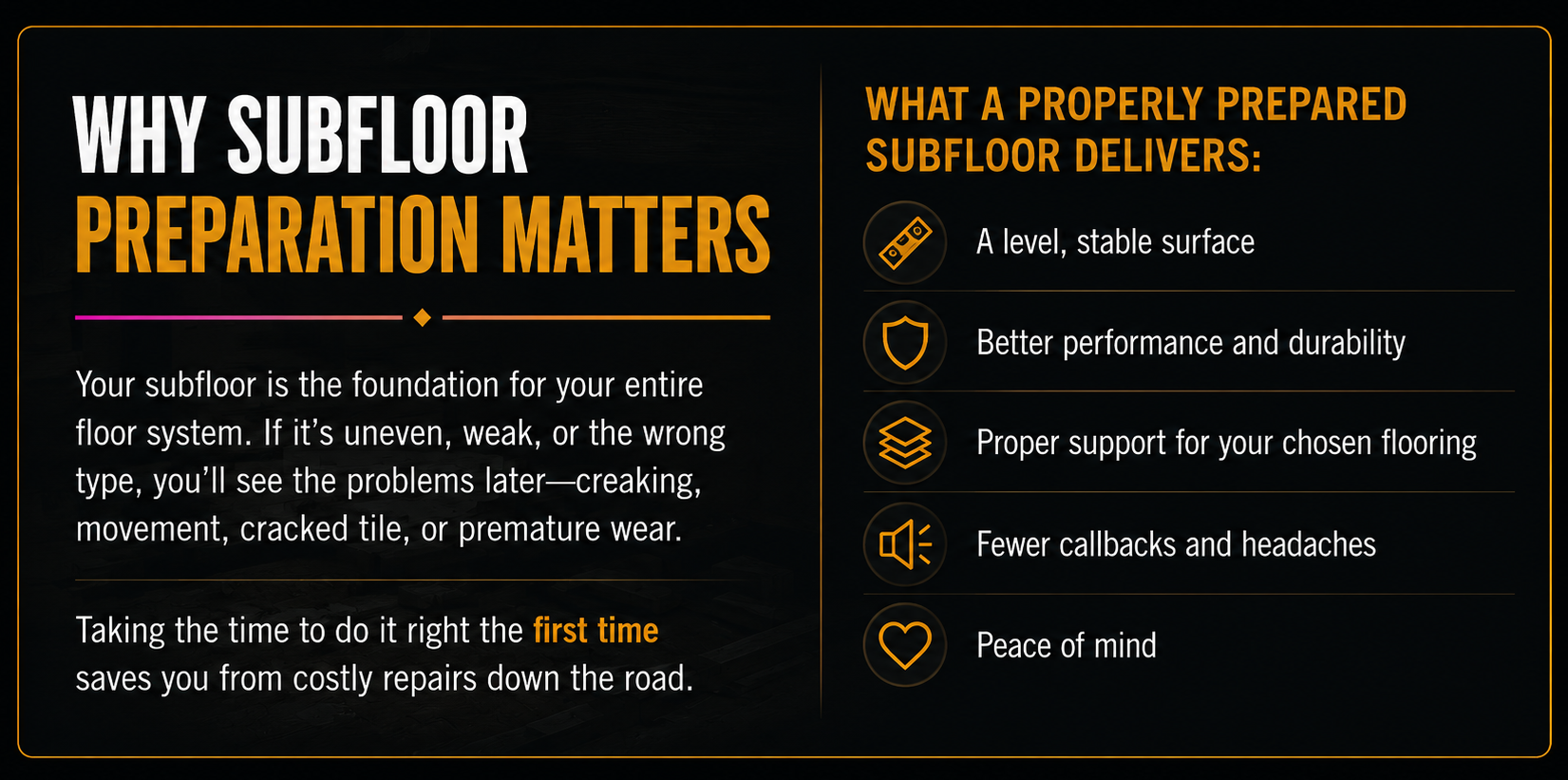
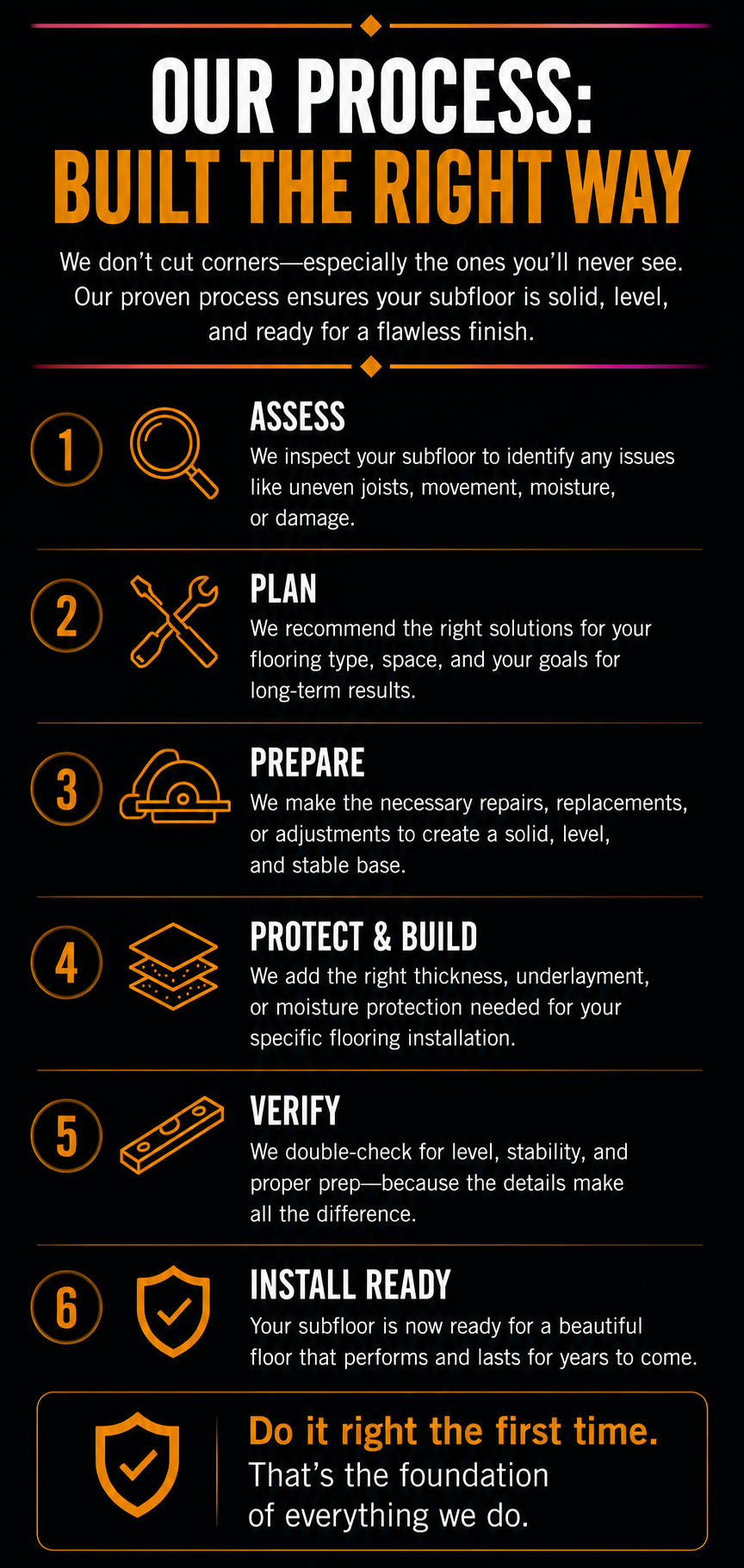
Absolutely. The subfloor is the foundation of your new floor, and every flooring manufacturer has installation requirements regarding flatness, strength, moisture, and support. Unfortunately, some companies avoid discussing subfloor preparation because it can increase the project cost and make it harder to win the job. A quality contractor will inspect the subfloor first and explain any issues before installation—not after problems appear.
-
Sometimes, but not always.
The existing floor must be flat, stable, securely attached, and compatible with the new flooring. Installing over an unsuitable surface can lead to movement, squeaks, cracked grout, joint failure, or premature wear.
-
Flatter than most homeowners realize.
Most flooring manufacturers specify maximum variations over a given distance. Even small dips or high spots can cause click-lock joints to fail, create hollow spots, or leave the finished floor feeling soft or bouncy.
-
Both have their place.
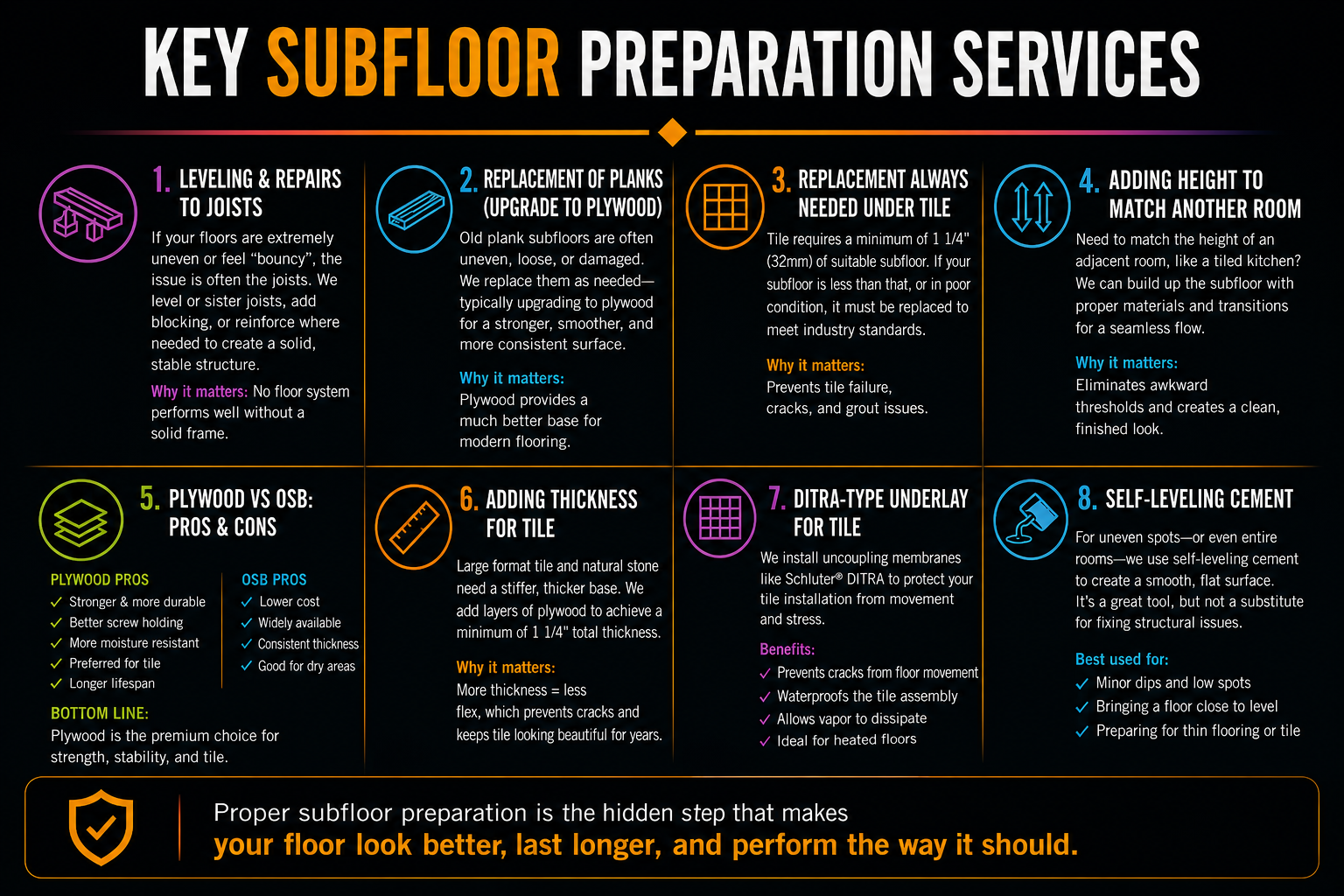
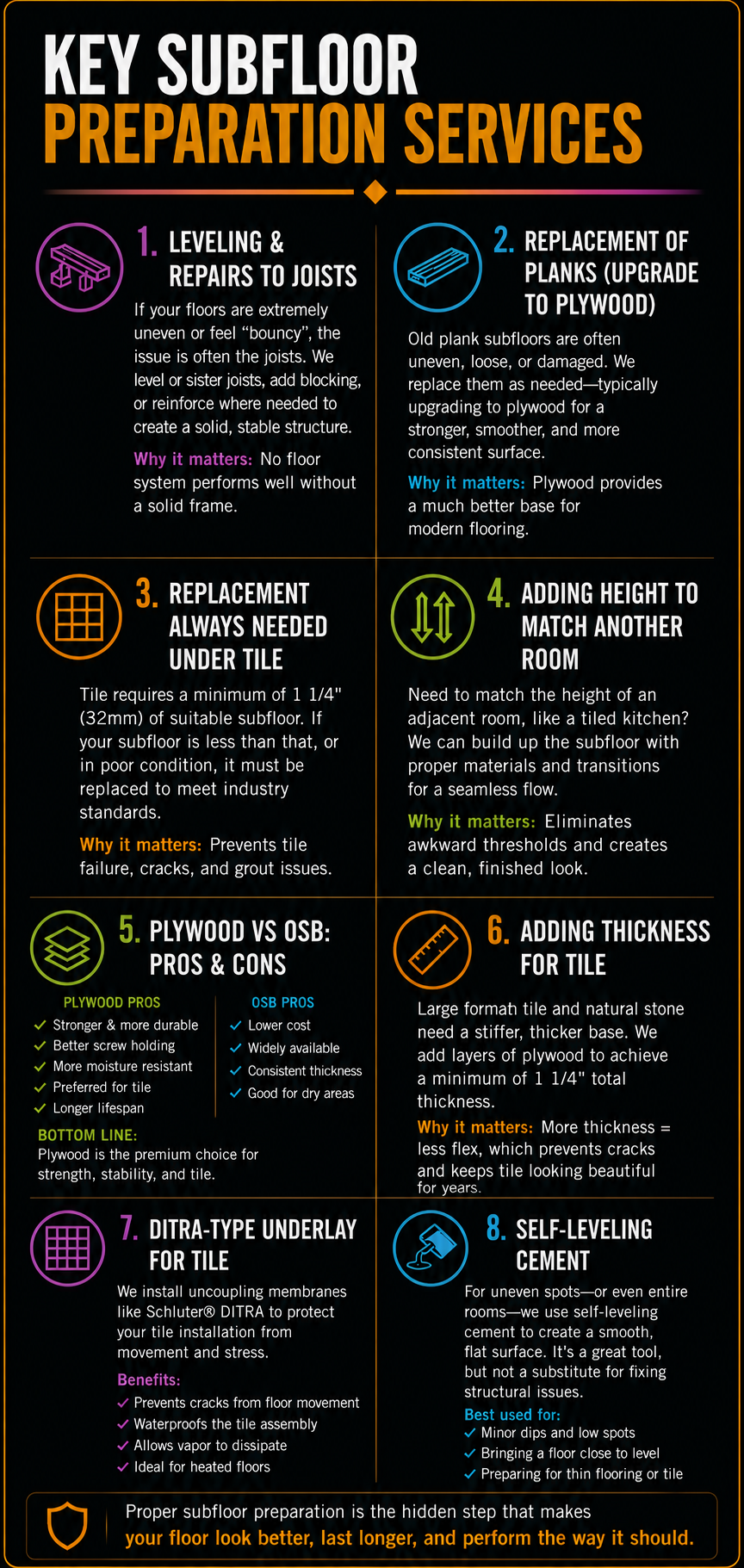
OSB performs well in many applications and is commonly used in new construction. However, plywood generally offers better screw-holding strength, greater moisture resistance, and increased rigidity, making it the preferred choice for many flooring upgrades—especially beneath tile.
-
Self-leveling cement is an excellent product—but it isn't a cure-all.
If the floor is uneven because the joists are sagging, damaged, or improperly framed, correcting the structure is usually the better long-term solution. Self-leveler should improve the surface—not compensate for structural problems whenever possible.
-
Tile and natural stone don't tolerate movement well.
A rigid floor minimizes flexing that can crack tiles or grout. Large-format tile is especially demanding, which is why we often build the subfloor to at least 1¼ inches thick before installing an uncoupling membrane such as Ditra.
-
An uncoupling membrane helps separate the tile from minor movement in the subfloor.
It reduces stress on the tile assembly, helps prevent cracks, improves waterproofing when installed correctly, and can provide vapor management and support for heated floor systems.
-
Because it's skilled work that no one sees—but everyone depends on.
Repairing joists, replacing damaged subfloors, leveling surfaces, and building the proper foundation all take time and experience. While it adds to the upfront cost, proper subfloor preparation often prevents far more expensive repairs later. Like a house, a beautiful floor is only as good as the foundation beneath it.