ON THIS PAGE:
1) How Sound Travels
2) Wall Framing for Reducing Sound
3) Drywall Installation Methods
4) How Insulation Can Help
5) Isolating Your Ceiling
6) Flooring Choices
7) Choosing the Best Underlay
8) Door Construction
9) Air Gaps Help Reduce Sound
10) Understanding Sound Ratings

Serving London, Ontario
and surrounding areas

-
Although they're often used interchangeably, they're very different.
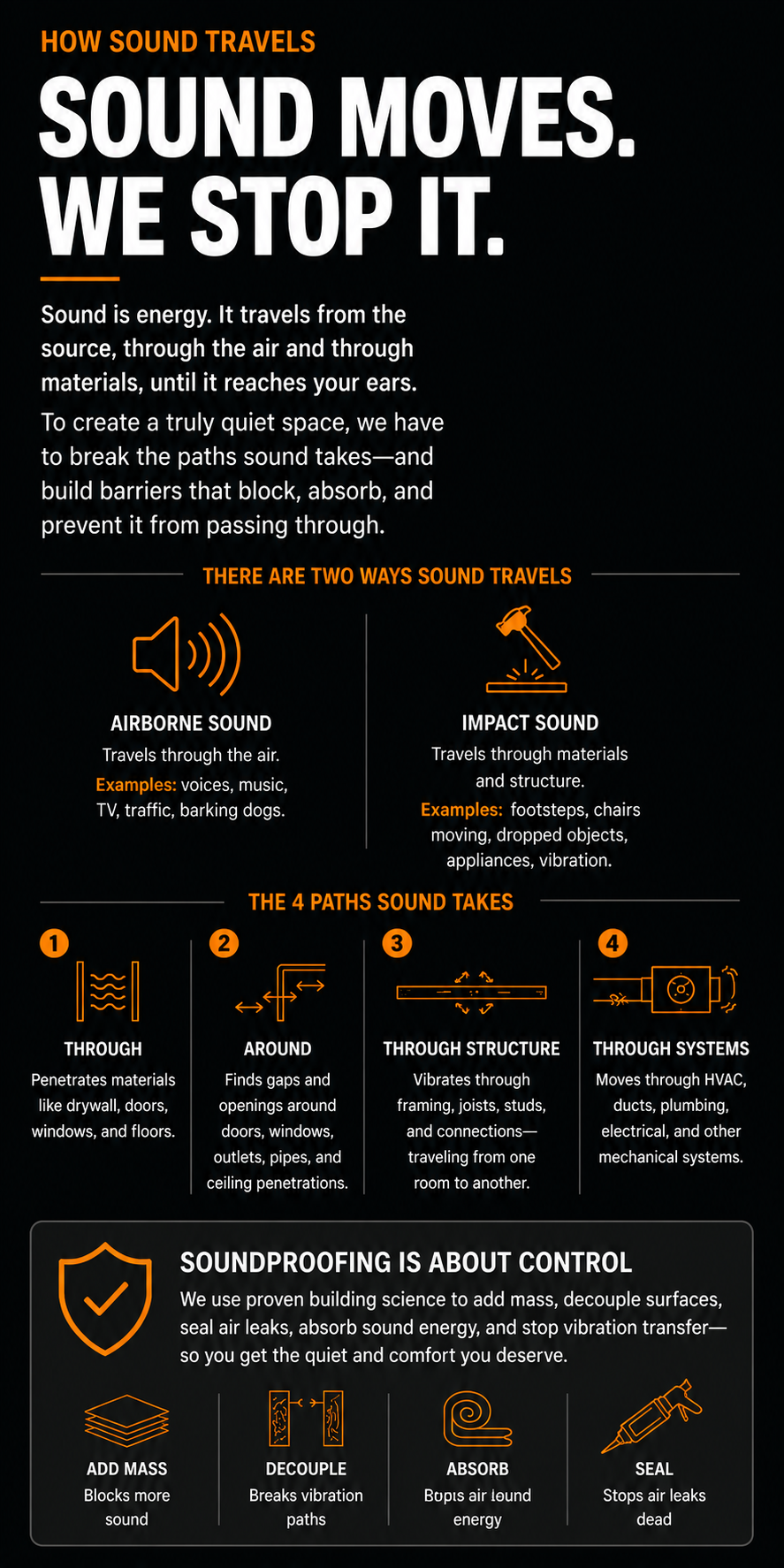
Soundproofing prevents sound from traveling between rooms by adding mass, separating surfaces, sealing air gaps, and reducing vibration transfer.
Sound absorption reduces echo and reverberation within a room by absorbing sound energy. Materials like acoustic panels, insulation, and carpets improve room acoustics but do very little to stop sound from passing through walls.
For the best results, a soundproof assembly uses both techniques together.
-
True "soundproofing" is extremely difficult and usually only achieved in recording studios or specialized commercial spaces.
For most homes, the goal is significant sound reduction, not total silence. A properly designed wall or ceiling assembly can dramatically reduce voices, televisions, music, and footstep noise while remaining practical and affordable.
The right combination of mass, insulation, decoupling, and airtight sealing delivers the biggest improvement.
-
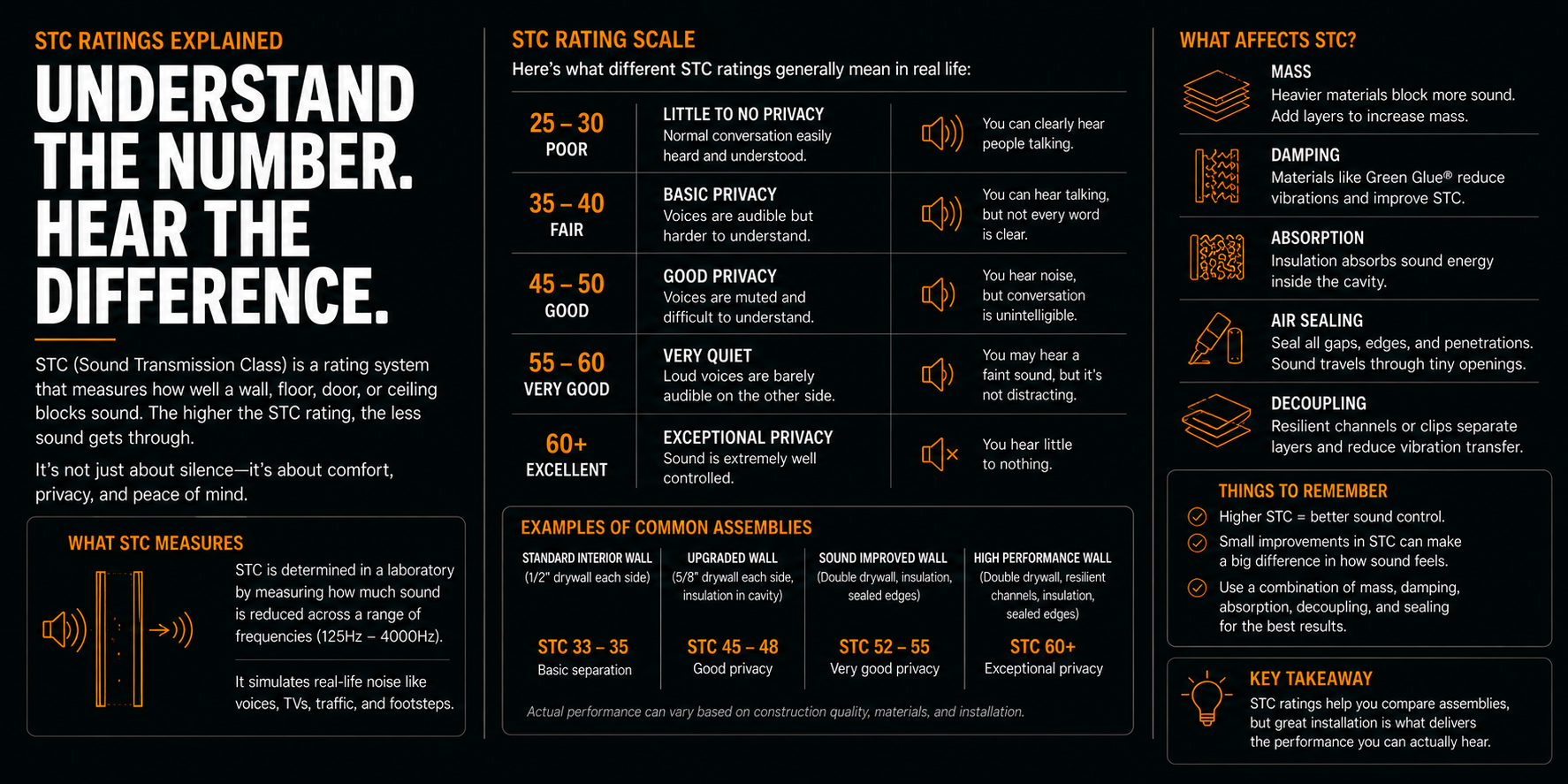
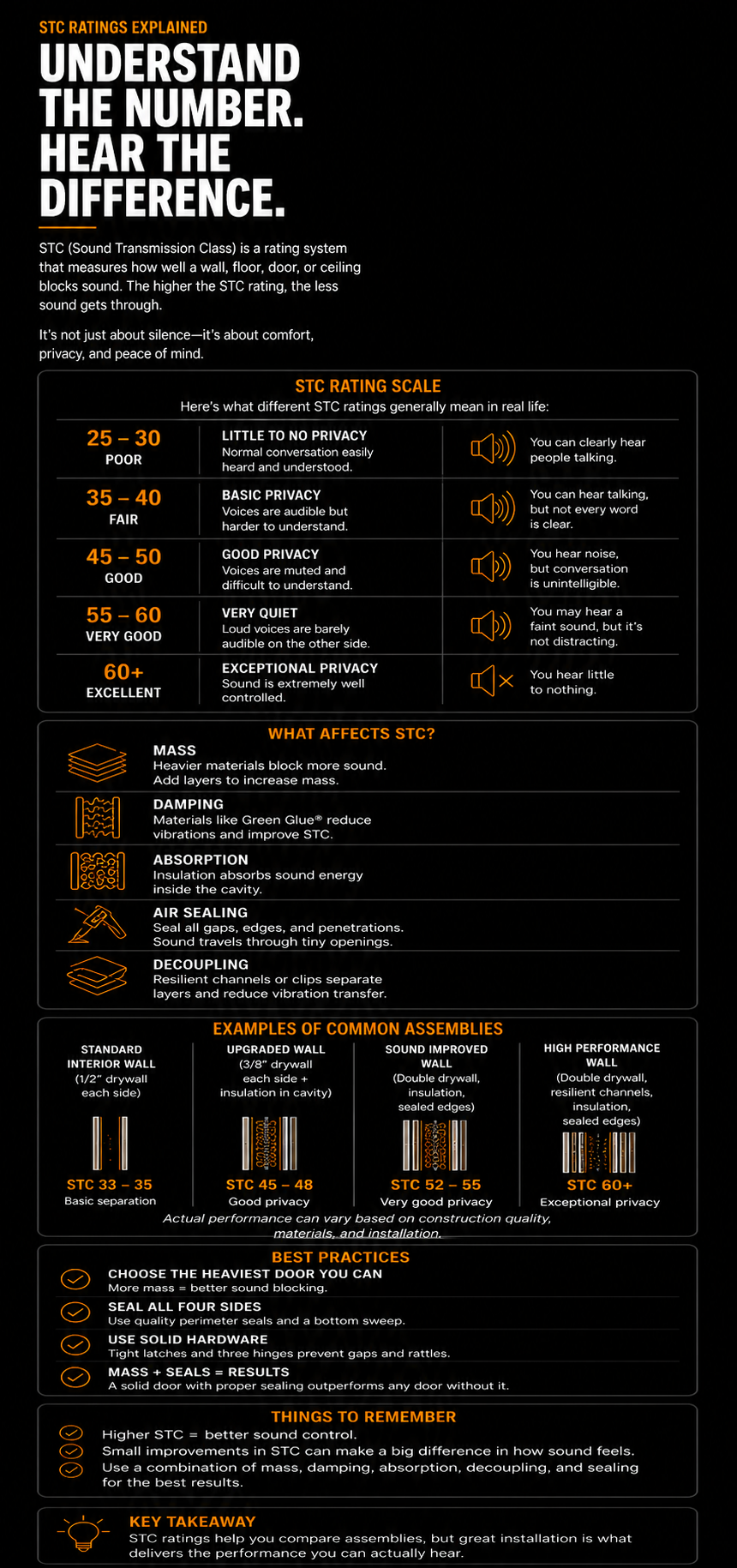
STC (Sound Transmission Class) measures how well a wall, floor, ceiling, or door blocks airborne sound such as voices, music, and televisions.
Higher STC ratings mean better sound isolation.
STC 30: Normal conversation is easily heard.
STC 40: Speech becomes difficult to understand.
STC 50: Most conversation is barely audible.
STC 60+: Excellent sound isolation.
STC ratings are useful for comparing assemblies, but proper installation is just as important as the rating itself.
-
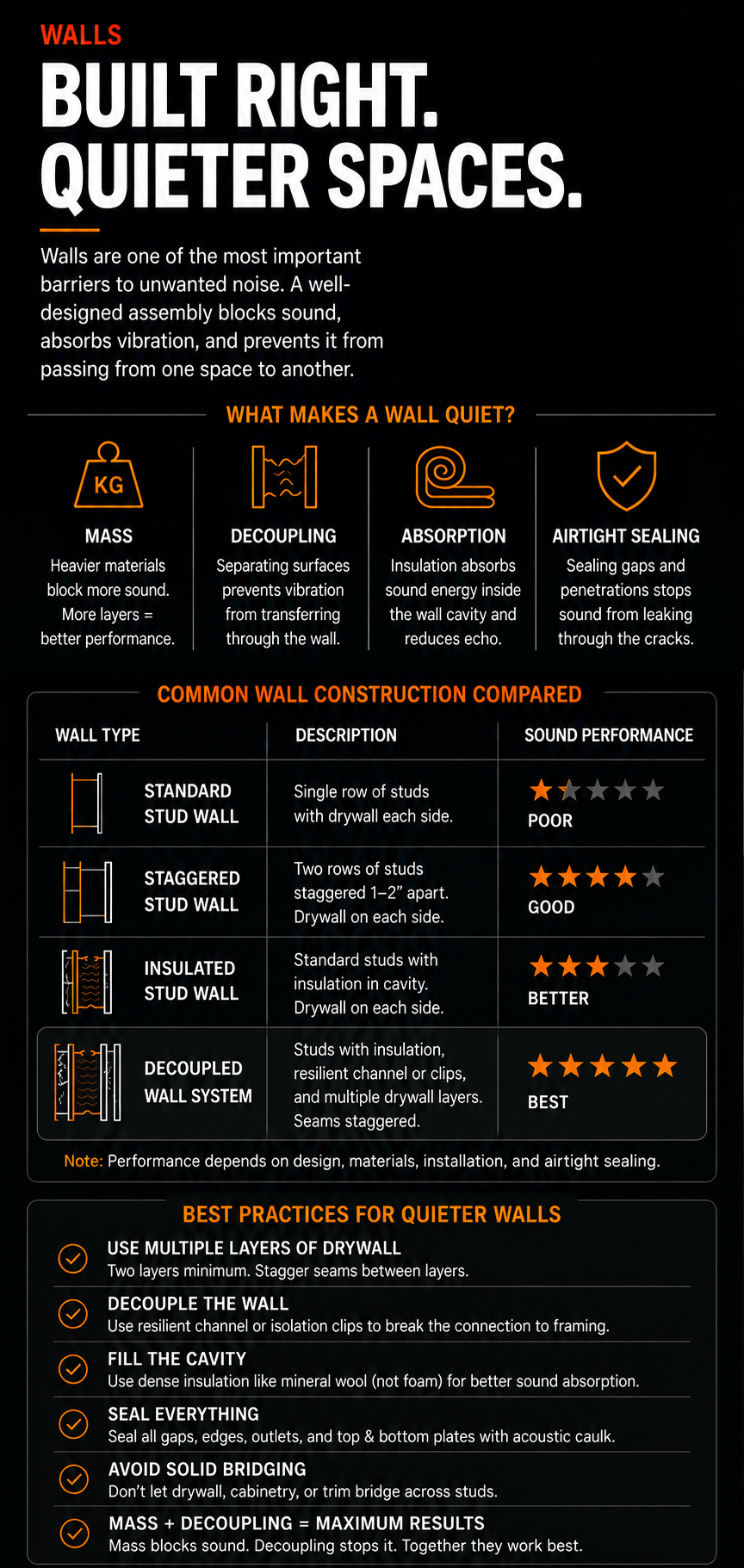
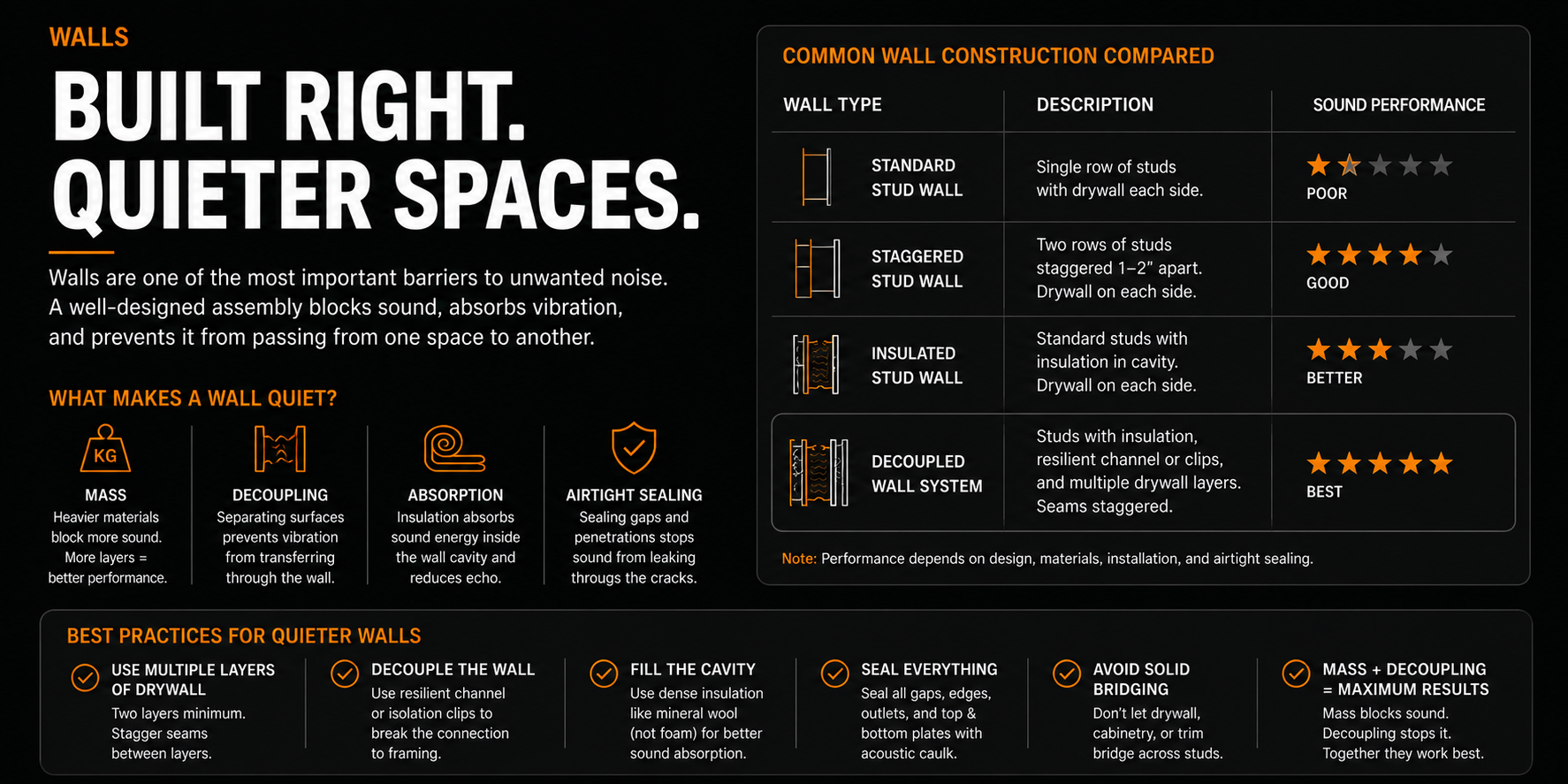
There isn't a single product that soundproofs a room.
The best-performing systems combine several building science principles:
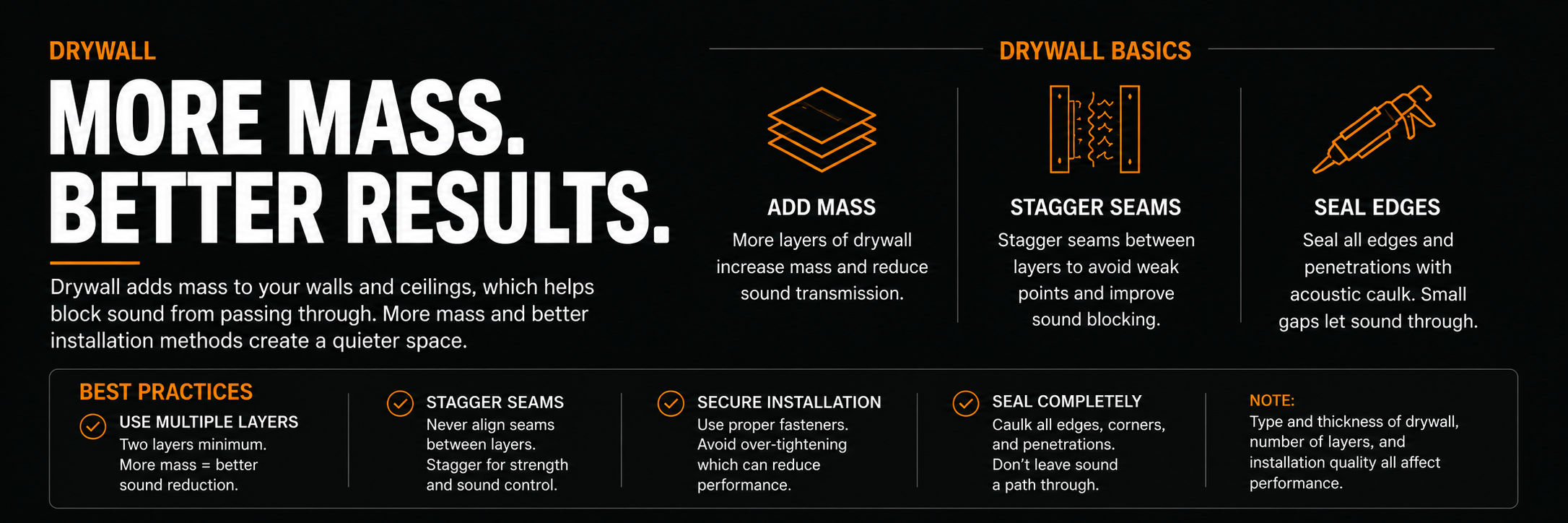
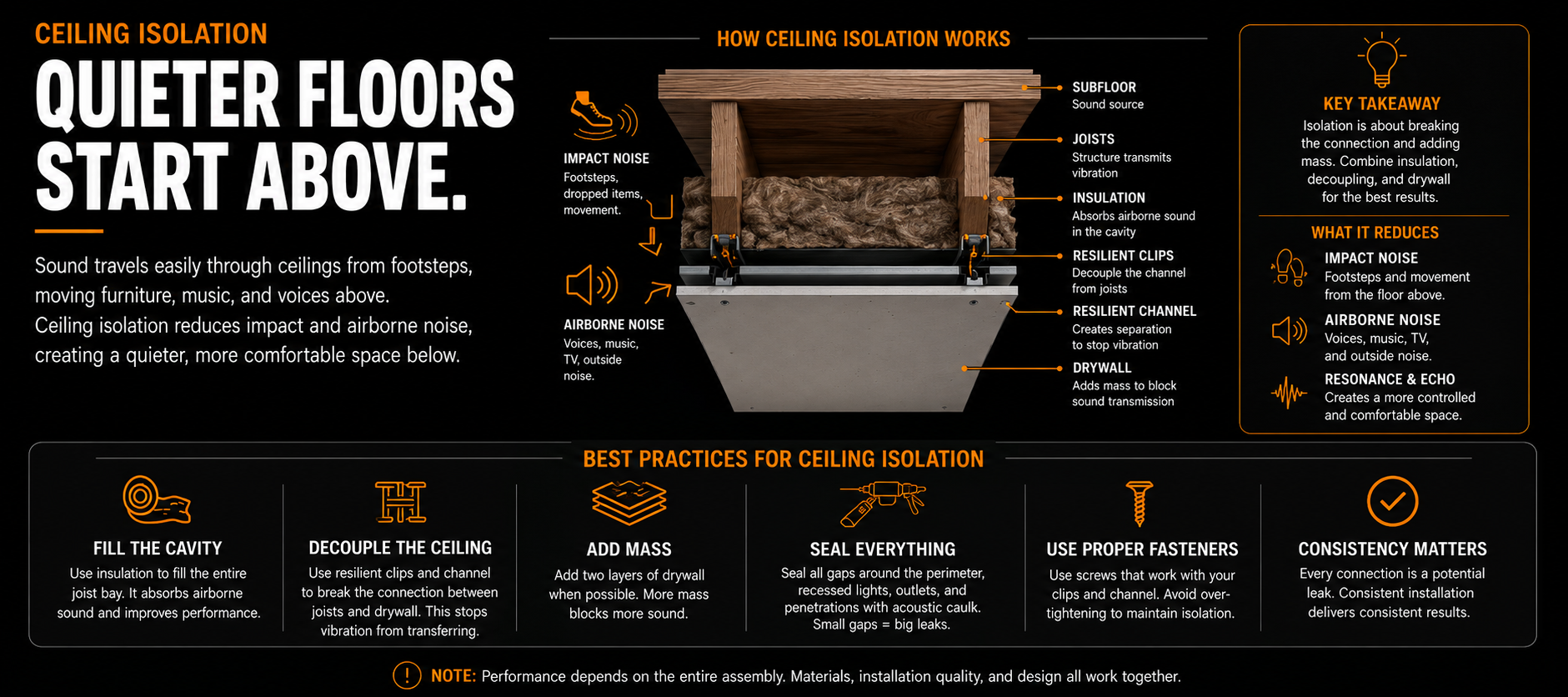
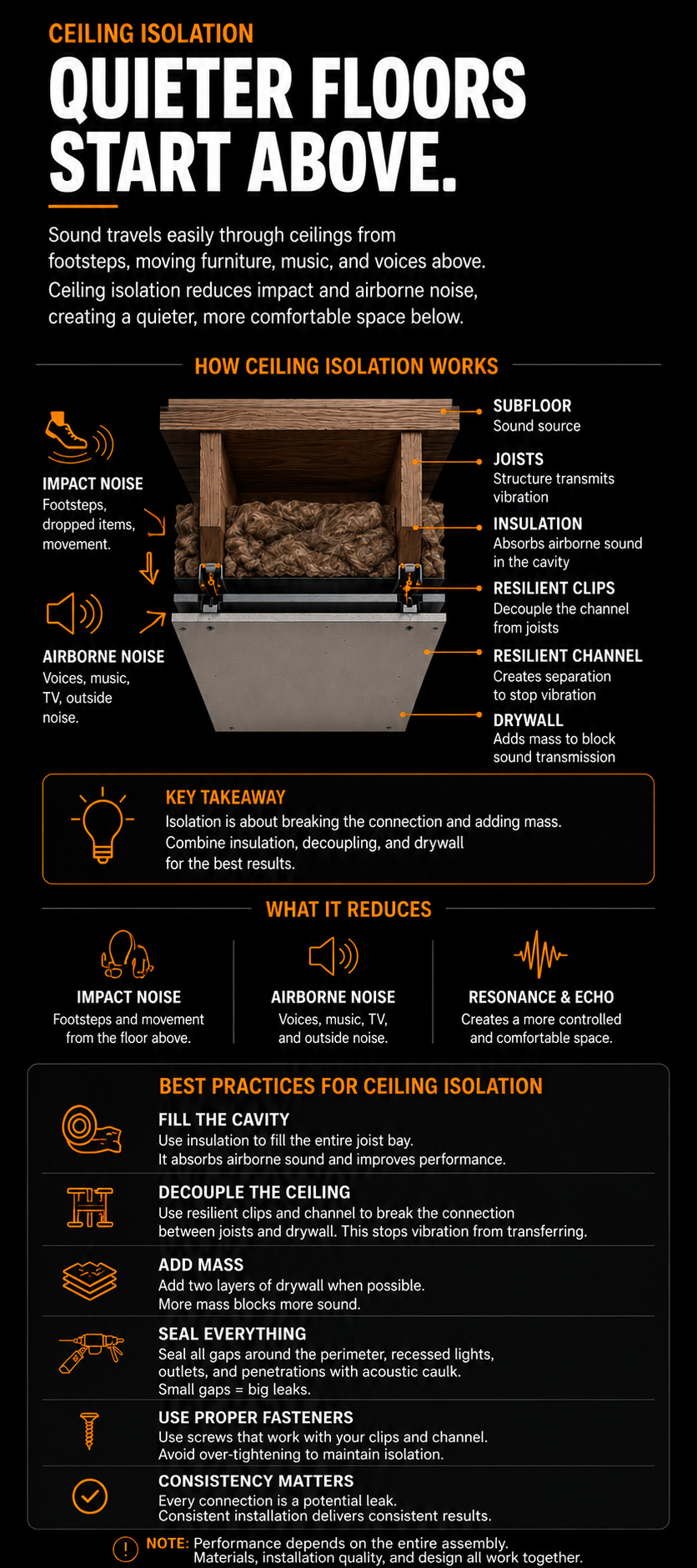
Add mass with additional drywall.
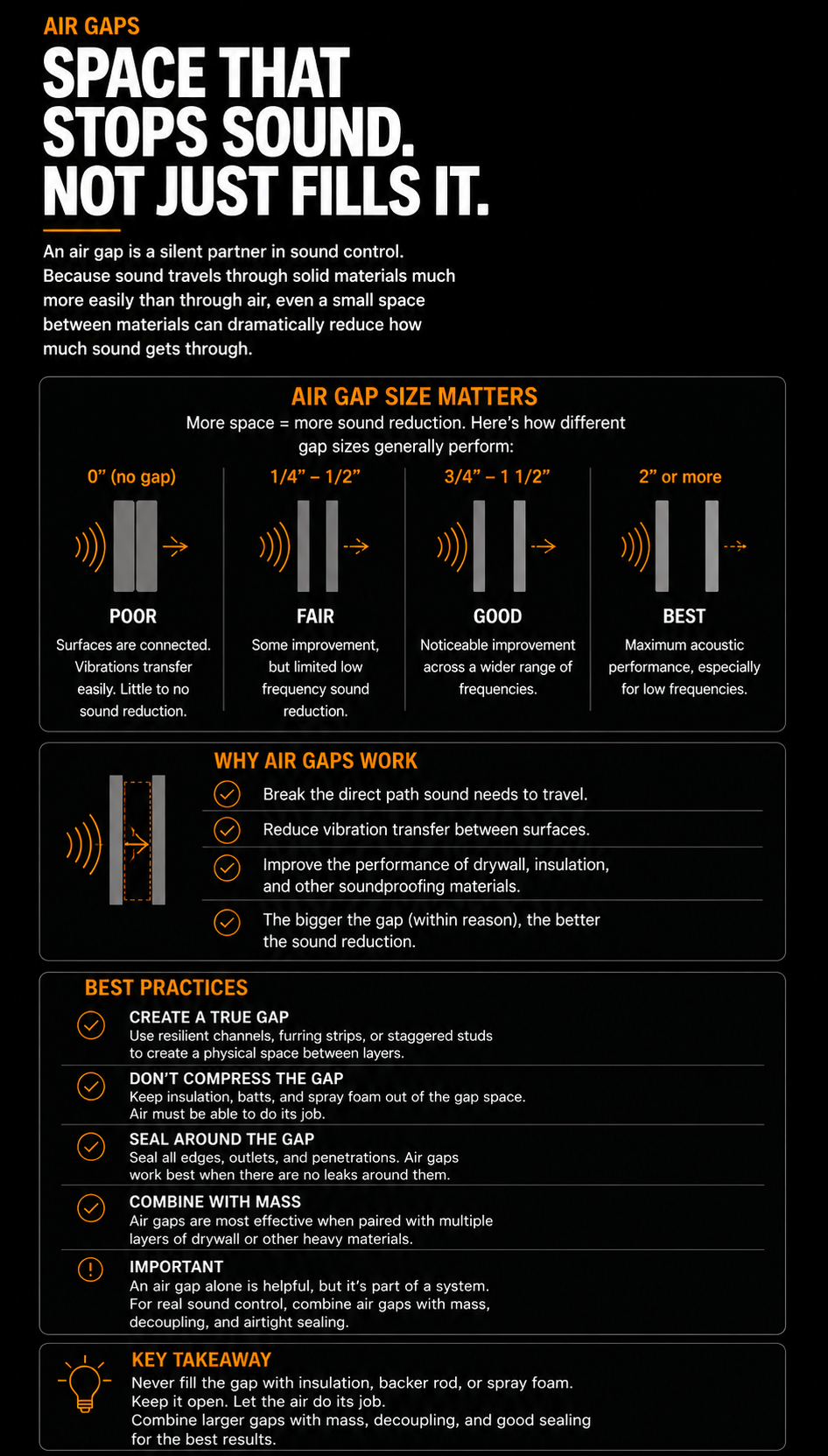
Decouple surfaces using resilient channels or clips.
Fill cavities with quality insulation.
Seal every air gap with acoustic sealant.
Eliminate vibration paths wherever possible.
Soundproofing works best as a complete system rather than relying on one product alone.
-
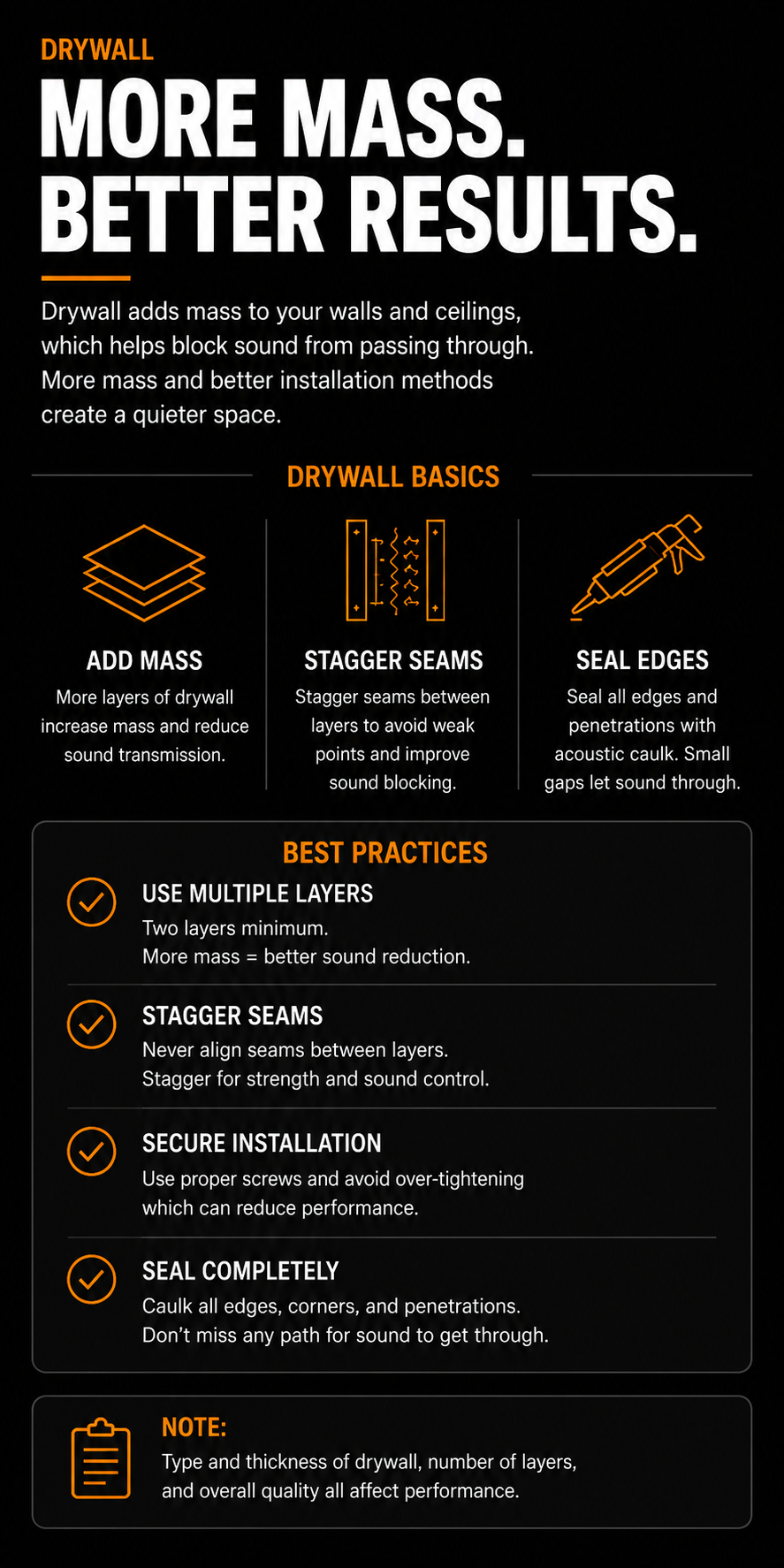
Yes. Adding another layer of drywall increases the wall's mass, making it harder for sound to pass through.
Even better results are achieved by combining multiple drywall layers with damping compounds, resilient channels, insulation and proper air sealing.
Simply adding drywall helps—but it's only one part of an effective sound
-
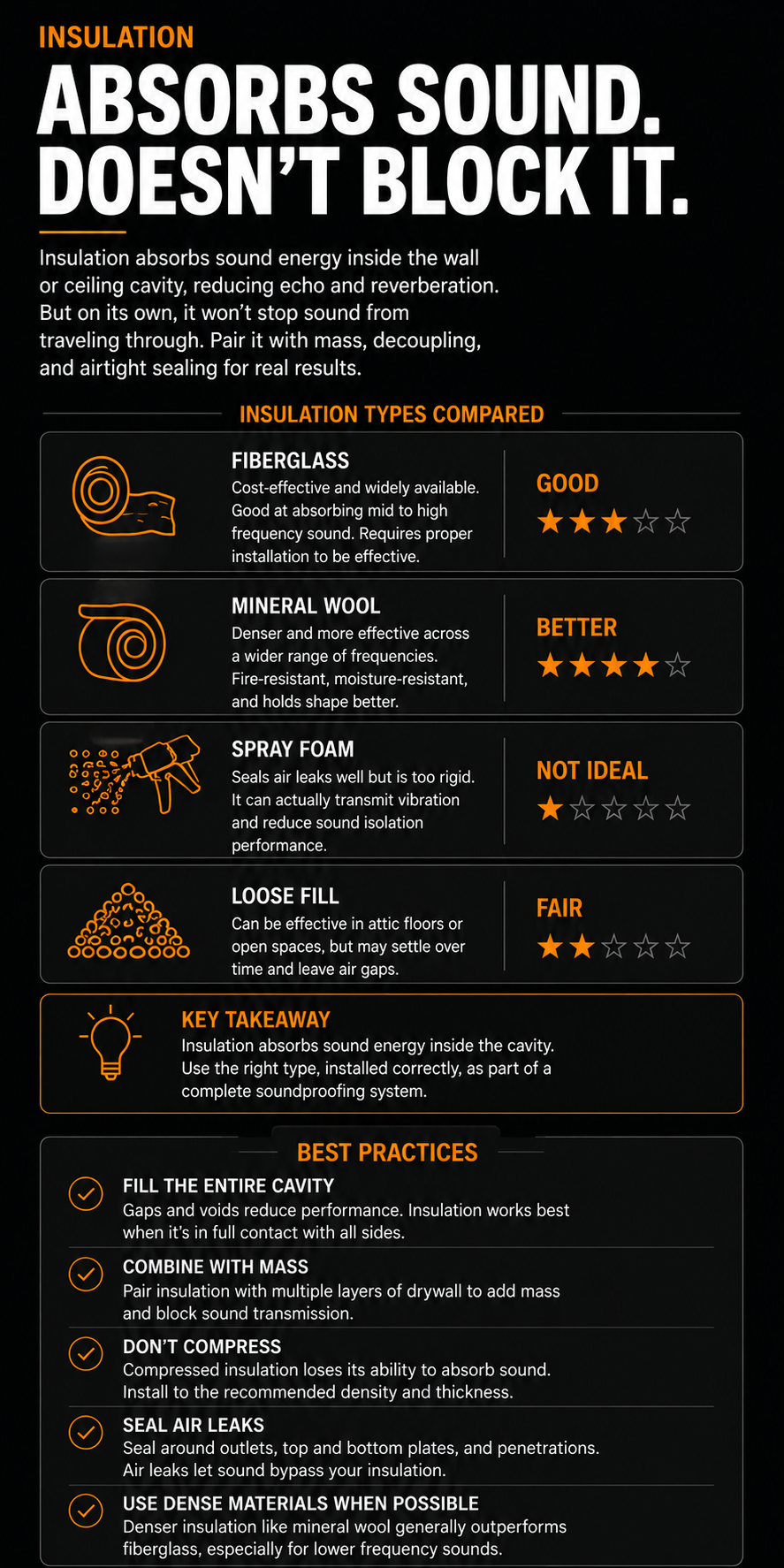
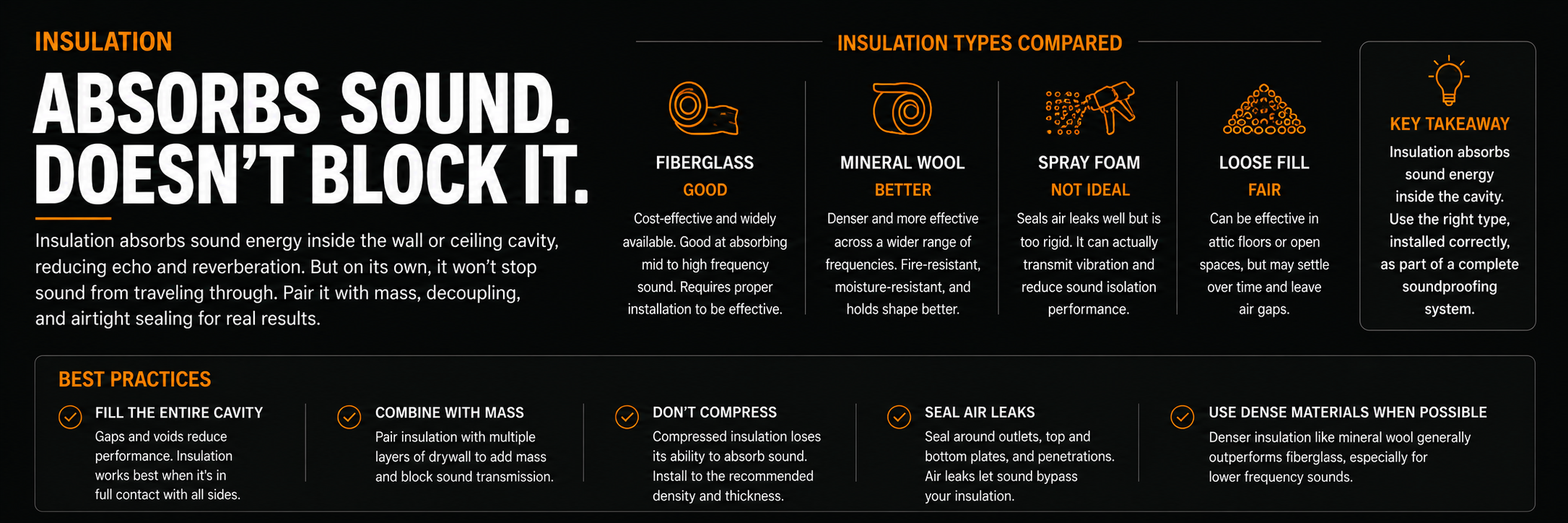
For most walls and ceilings, mineral wool is one of the best insulation choices for soundproofing. Its higher density allows it to absorb a wider range of sound frequencies than standard fiberglass while also offering excellent fire resistance and moisture resistance.
Fiberglass still performs well and is a good budget-friendly option, but insulation alone won't stop sound. For the best results, pair insulation with added mass, decoupling, and airtight sealing as part of a complete soundproofing system.
-
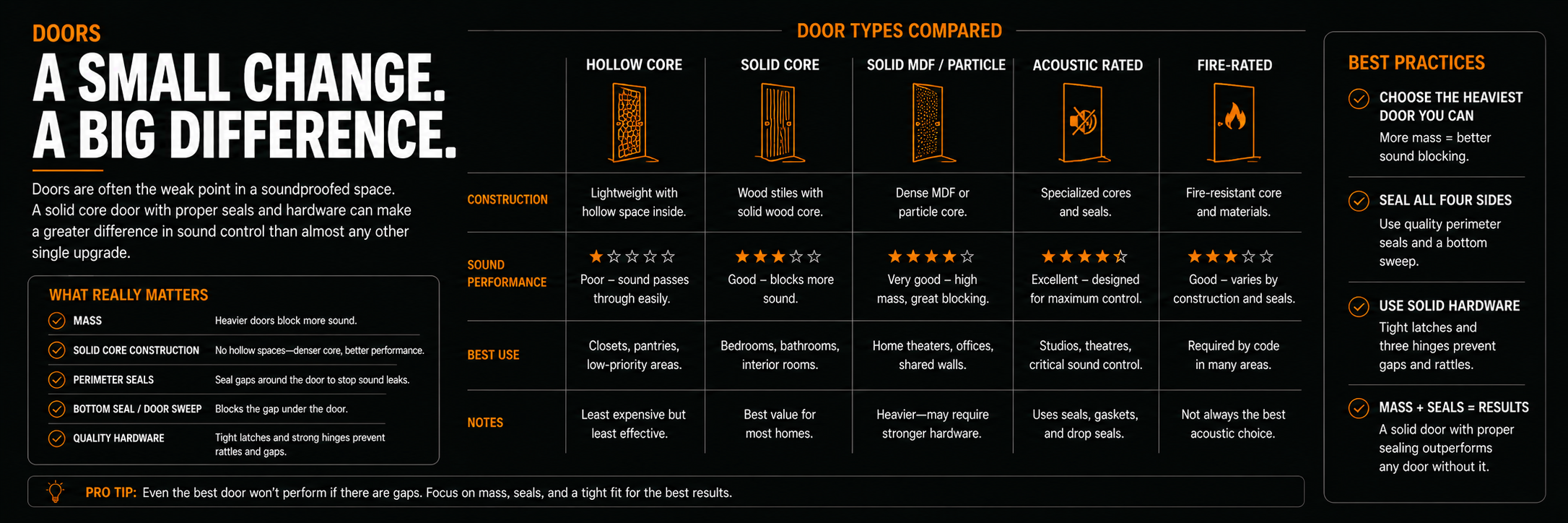
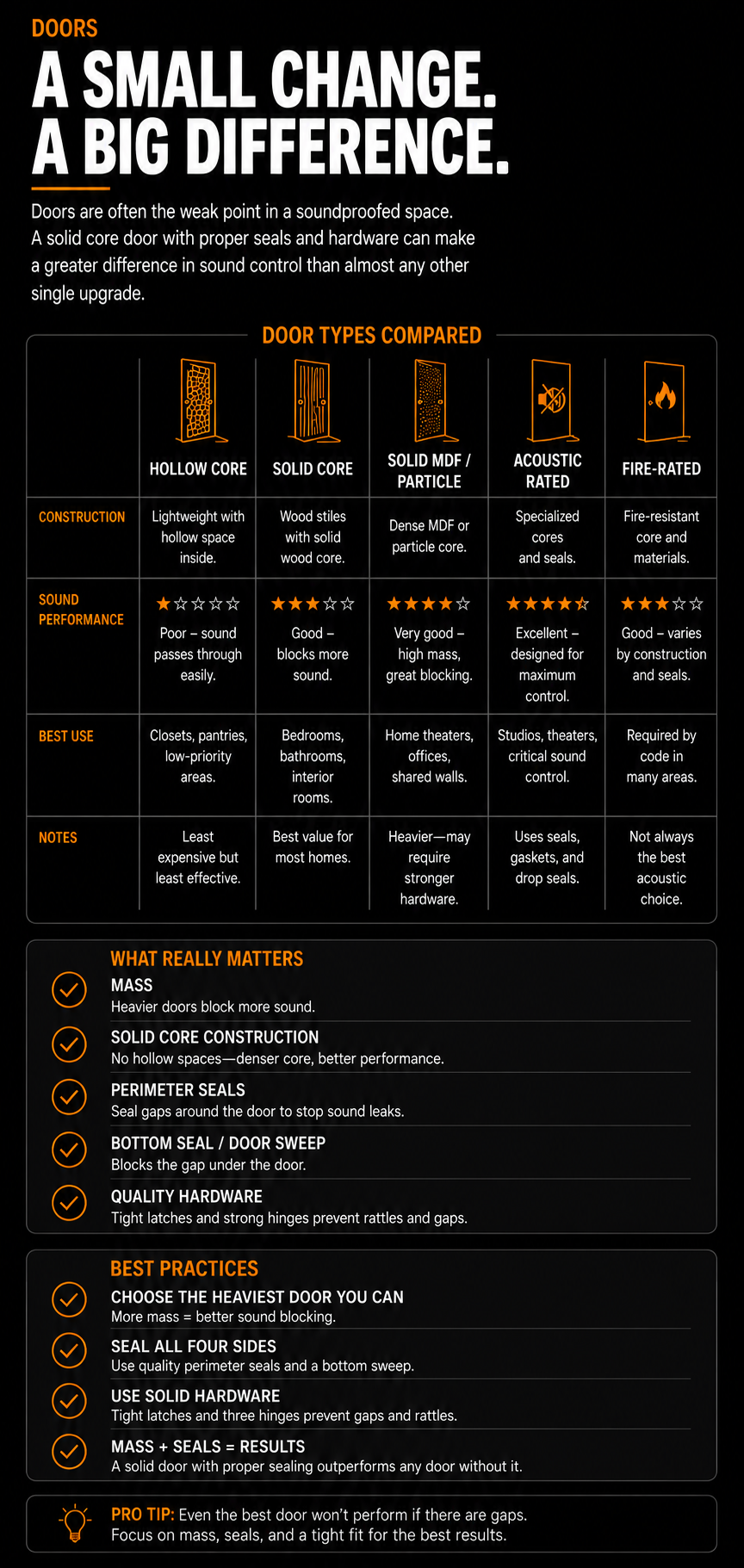
Absolutely. Hollow core doors are one of the weakest points in most homes when it comes to sound control. Replacing one with a solid core door can make a noticeable difference by adding mass and reducing sound transmission.
For even better performance, combine a solid core door with quality perimeter weatherstripping, an automatic door bottom or sweep, and a tight-fitting frame. A well-sealed solid core door often provides one of the best soundproofing upgrades for the cost.
-
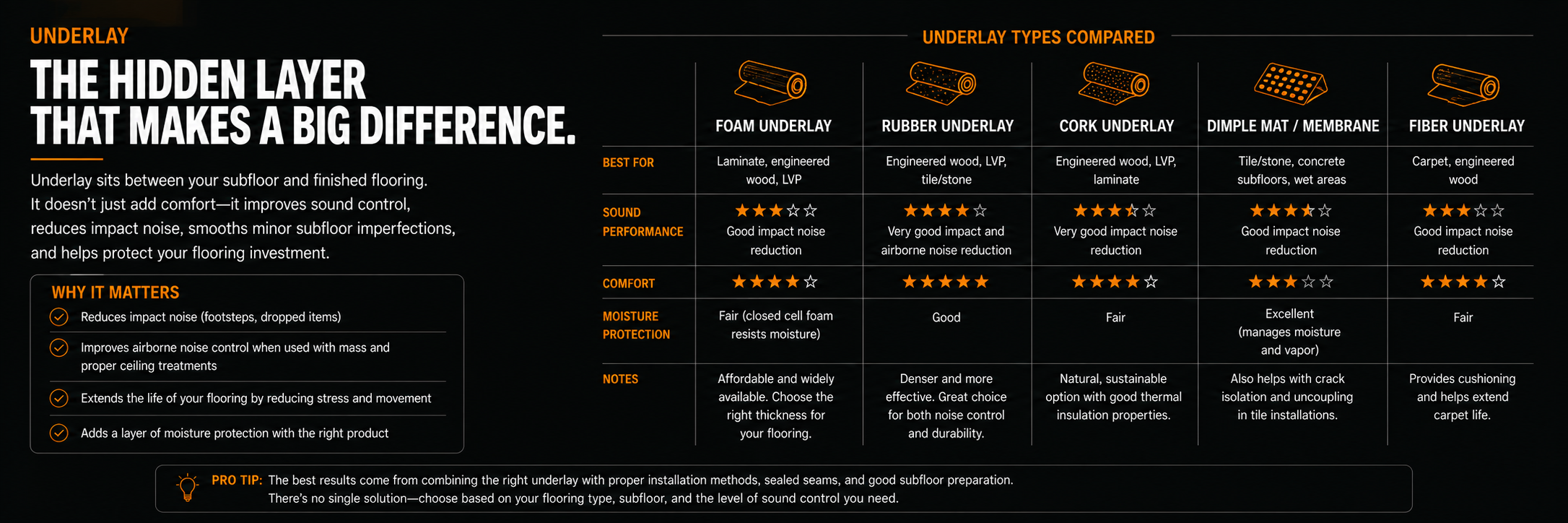
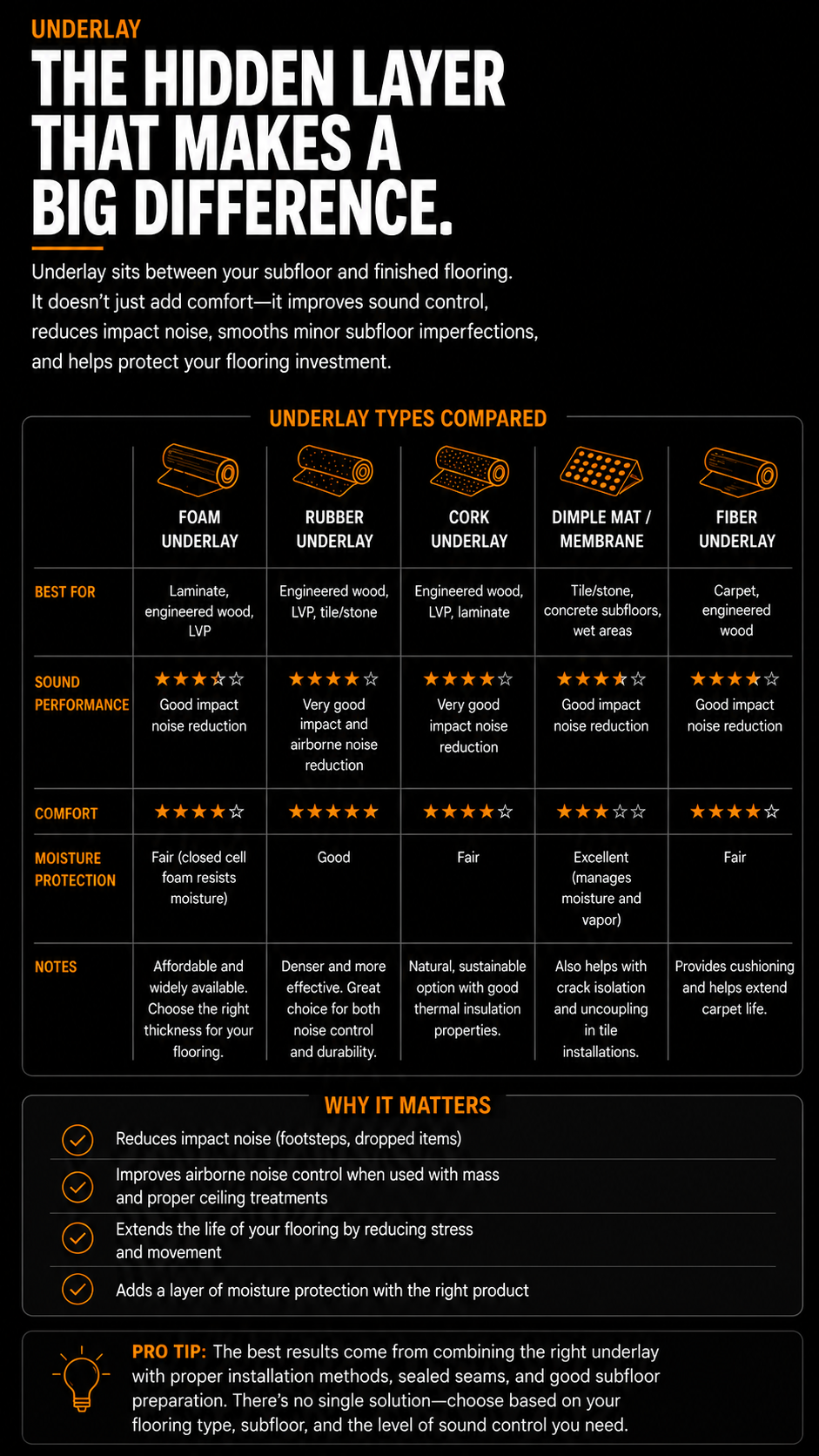
Yes—but the amount of improvement depends on what you're trying to achieve. Simple upgrades like installing a solid core door, sealing air gaps with acoustic sealant, adding weatherstripping, or improving flooring underlay can noticeably reduce noise without major renovations.
For more significant sound reduction, some demolition is usually required to add insulation, resilient channels, additional drywall, or other soundproofing components. The most effective solutions are almost always easier and more cost-effective when incorporated during a renovation.