
Serving London, Ontario
and surrounding areas

-
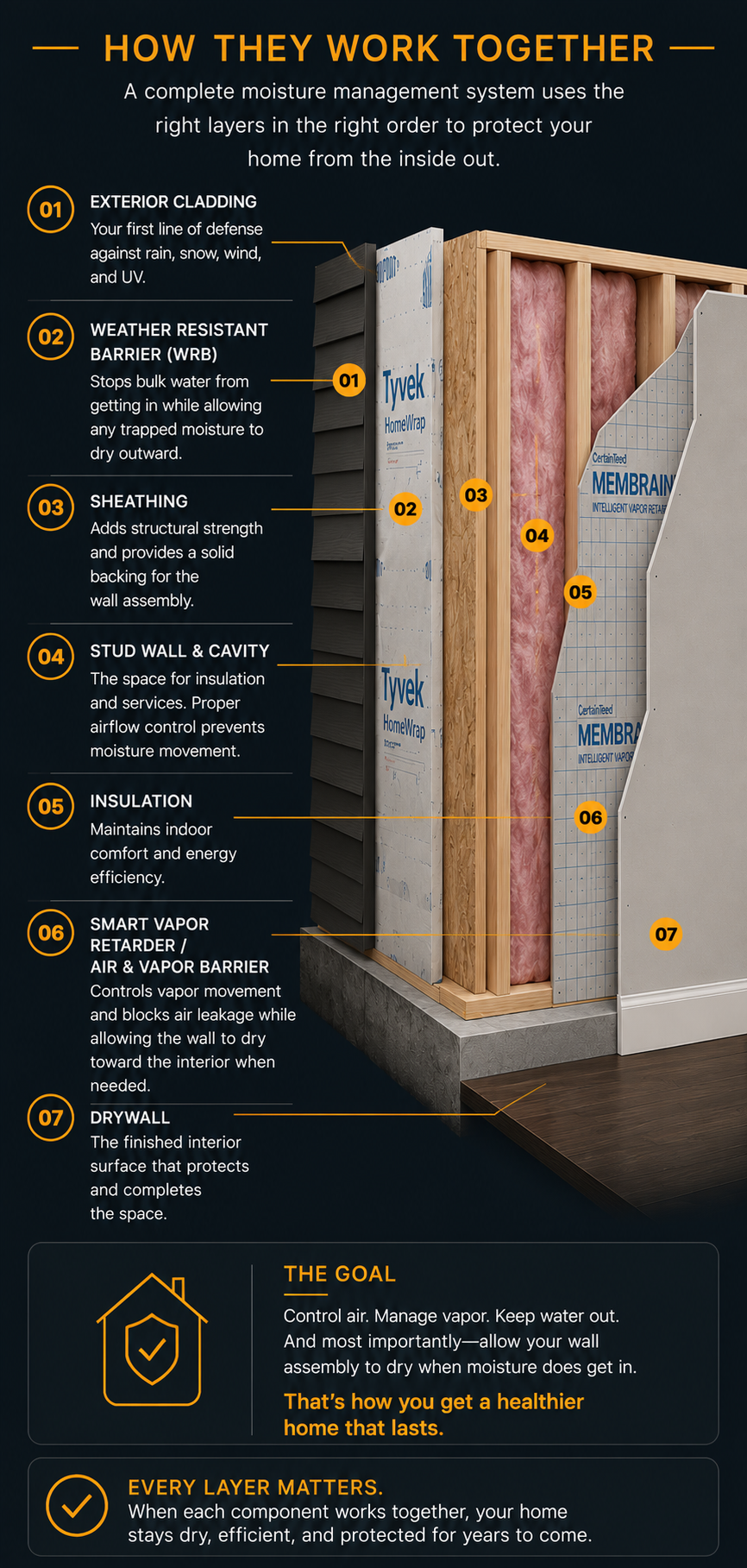
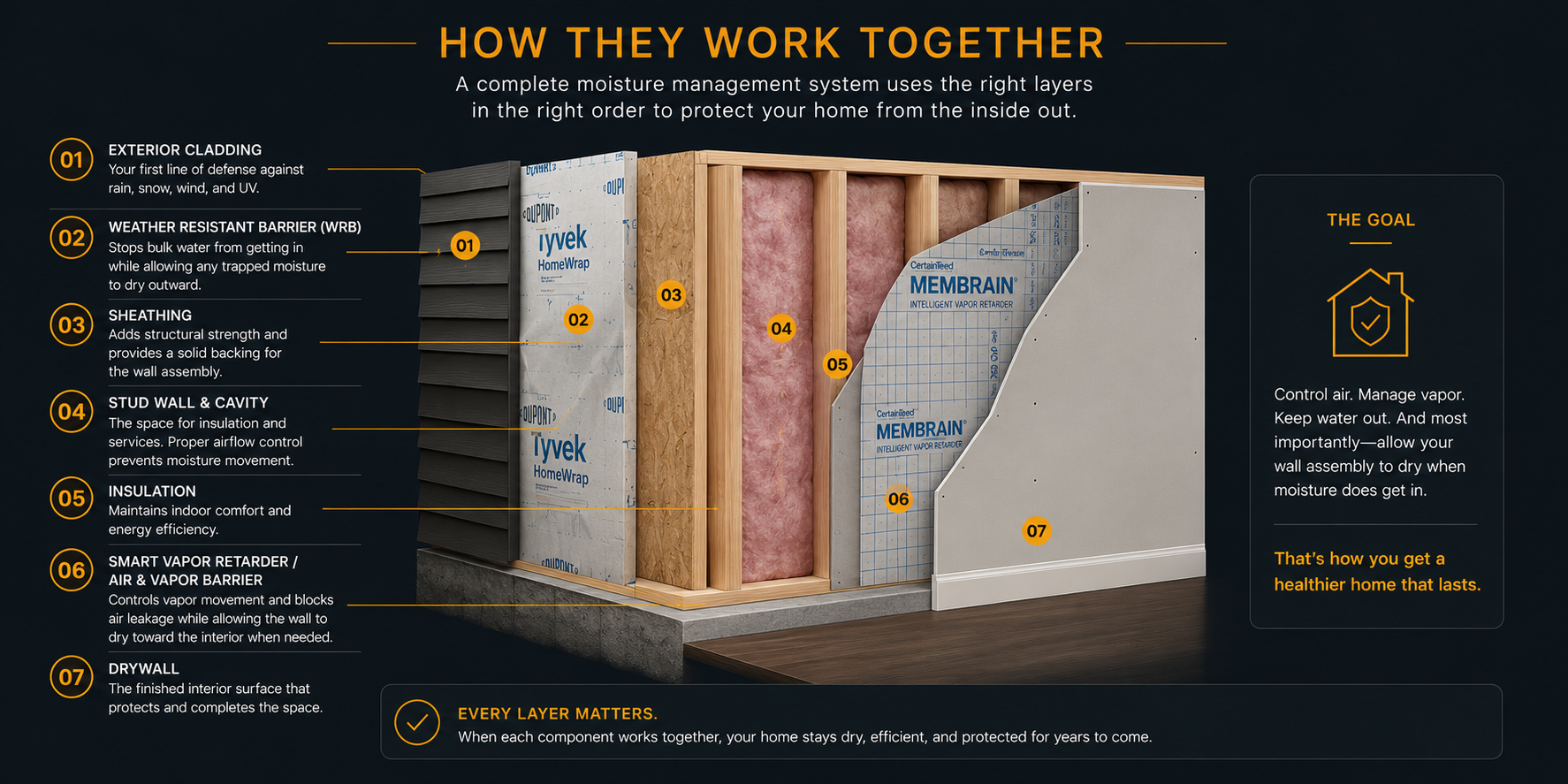
Although they often work together, they serve different purposes. An air barrier stops uncontrolled air movement, which carries heat and moisture through the building envelope. A vapor barrier or vapor retarder controls how water vapor moves through walls and ceilings. Modern building systems are designed to manage both air leakage and moisture movement for better durability and energy efficiency.
-
Not always. While traditional polyethylene is still used in many applications, newer intelligent vapor retarders can provide better moisture management by allowing wall assemblies to dry under the right conditions. The best solution depends on your home's design, local building code, and the wall assembly being used.
-
A smart vapor retarder changes how much moisture it allows through based on humidity levels. During the winter it limits moisture entering the wall, while during warmer, more humid conditions it becomes more permeable, helping trapped moisture dry out instead of becoming trapped inside the wall.
-
No. Tyvek® is a weather-resistant barrier (WRB), not a vapor barrier. It helps keep rain and wind out while allowing water vapor to escape from the wall assembly. It is installed on the exterior side of the wall and works together with the interior vapor control layer.
-
Even the best membrane won't perform properly if air can leak around electrical boxes, plumbing penetrations, windows, or framing joints. Proper tapes, sealants, and gaskets are essential for creating a continuous air barrier and preventing unwanted moisture movement.
-
Yes. No wall system is perfect forever. The goal isn't simply to block moisture—it's to manage it. Modern wall assemblies are designed to shed bulk water, control vapor movement, and allow any incidental moisture to dry safely before it causes damage.
-
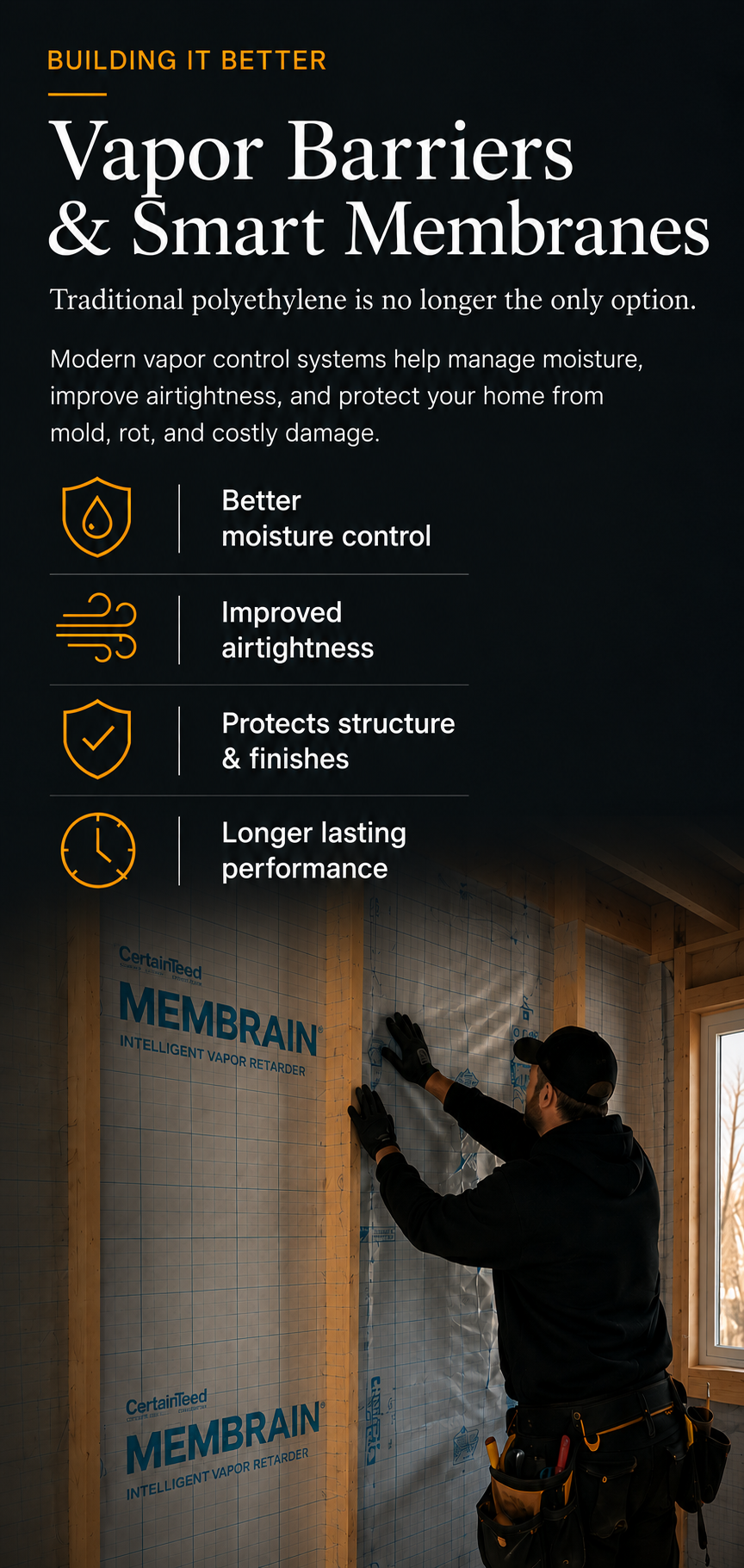
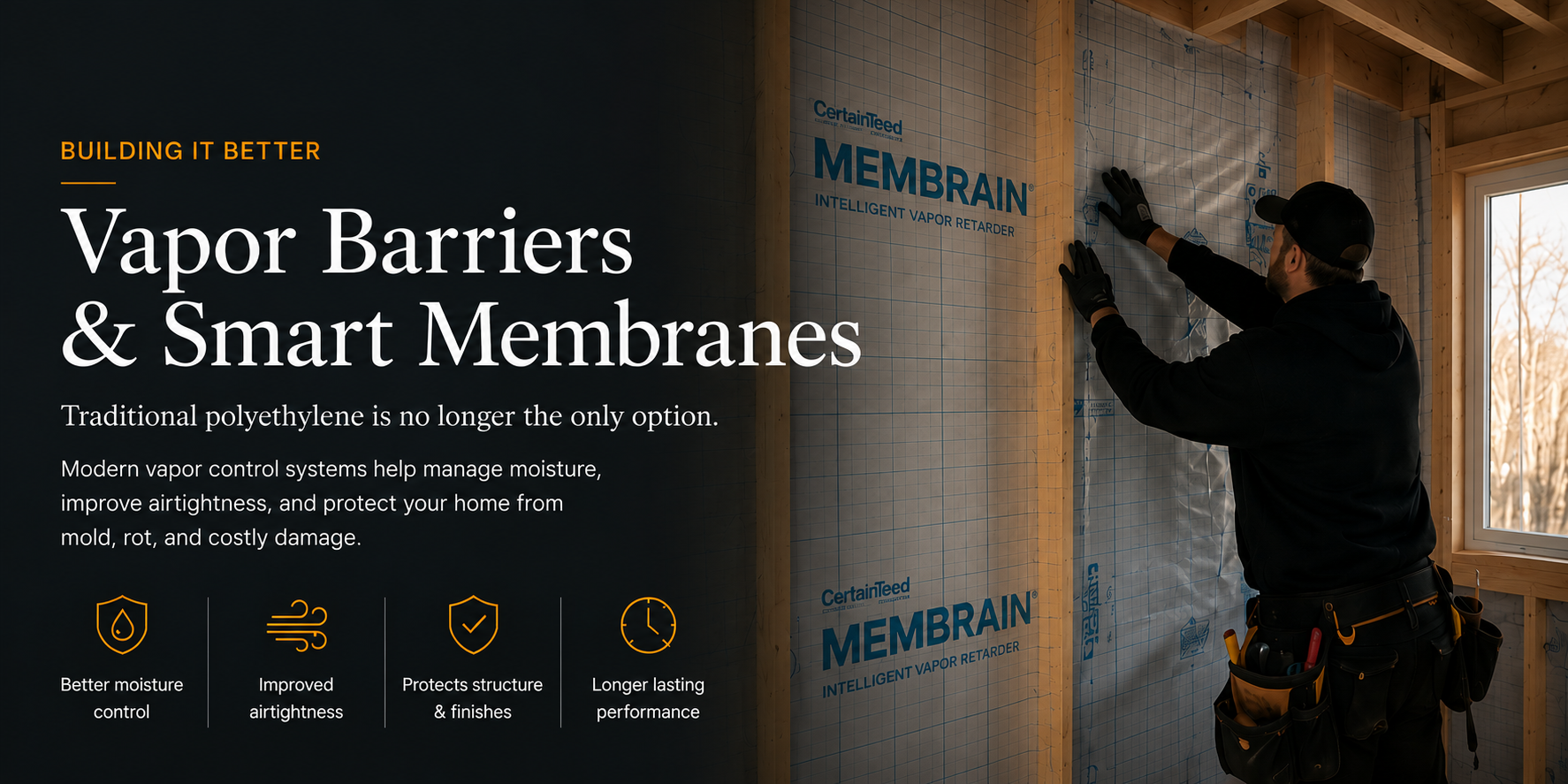
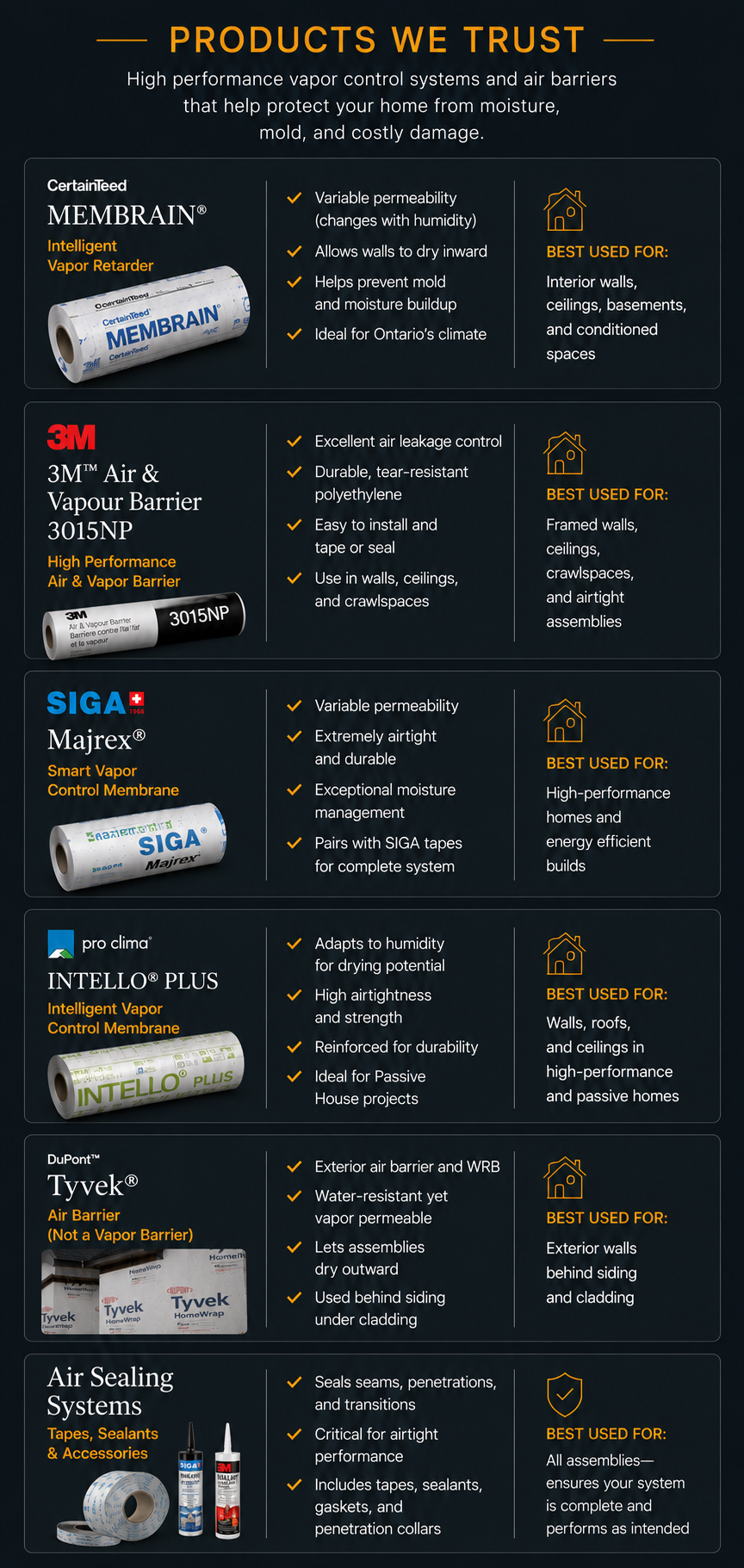
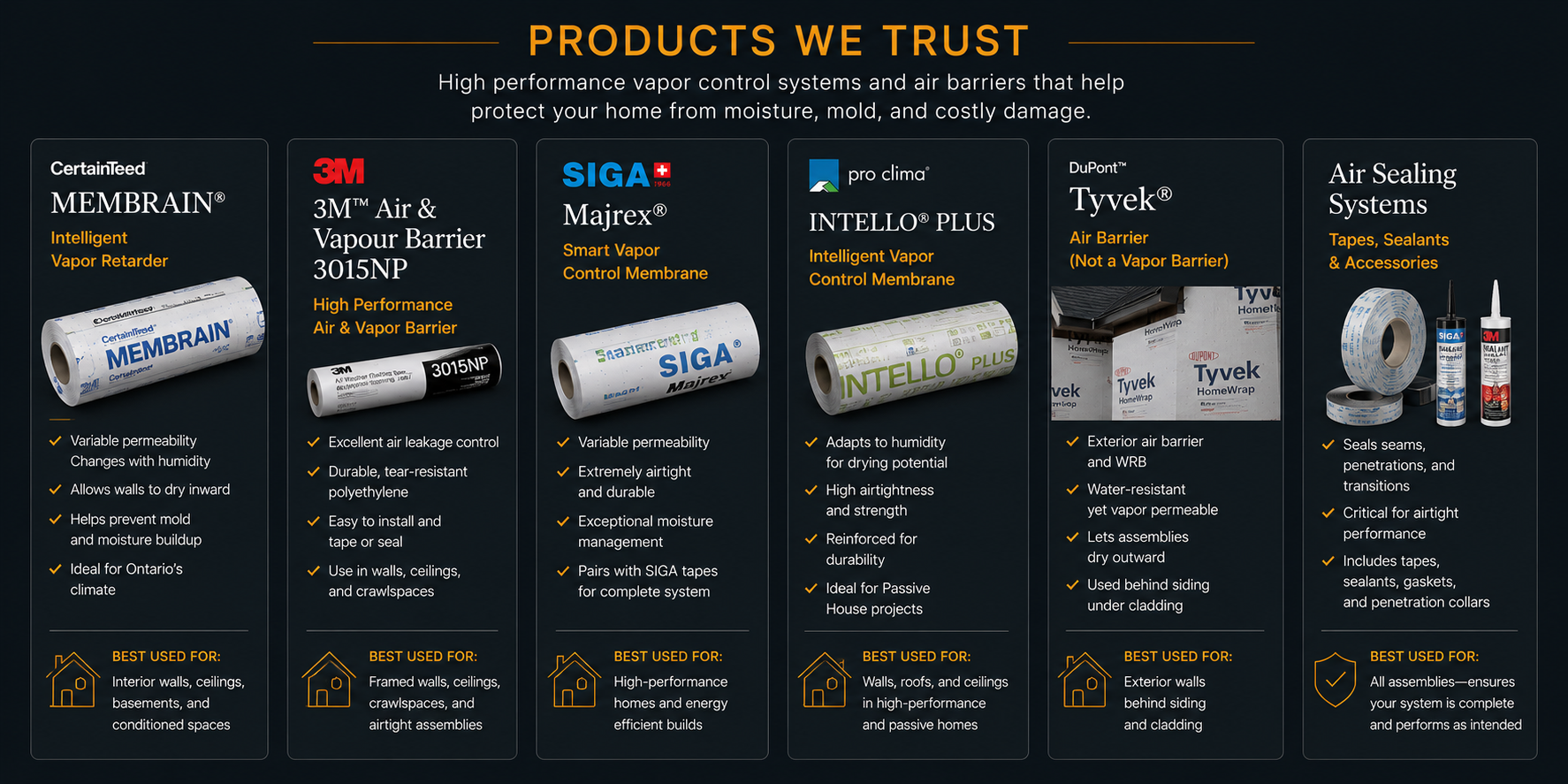
We don't choose products based on marketing—we choose them based on the project. High-quality systems such as CertainTeed MemBrain®, 3M™ Air & Vapour Barrier 3015NP, and other proven products each have advantages depending on the wall assembly, climate, and application. We select the solution that best fits your home.
-
It can. Proper air sealing and moisture management help reduce drafts, improve insulation performance, and make heating and cooling systems work more efficiently. While vapor control alone isn't a substitute for insulation, it plays an important role in creating a comfortable, durable, and energy-efficient home.

QUESTIONS ABOUT YOUR PROJECT?
Understanding moisture control can be confusing, and every home is different. We're happy to explain the options, discuss your renovation goals, and recommend the best approach for your walls, ceilings, or basement—without the technical jargon.